How to Improve Flexibility After Age 60
Bending down to tie your shoes shouldn’t leave you bracing yourself against the wall. Reaching for a can on the top shelf shouldn’t make you nervous about losing your balance.
If these everyday movements have gotten harder, you’re not alone, and you’re not imagining it.
Research tracking thousands of older adults found that flexibility naturally decreases by 20-30% between ages 55 and 86. That stiffness you’re feeling? It’s a normal part of aging, not a personal failing.
Here’s the encouraging part: studies show that 8-12 weeks of gentle, regular stretching can reverse much of this decline. You don’t need to touch your toes or do complicated yoga poses. You just need the right approach and consistency.
1. Why Flexibility Protects Your Independence
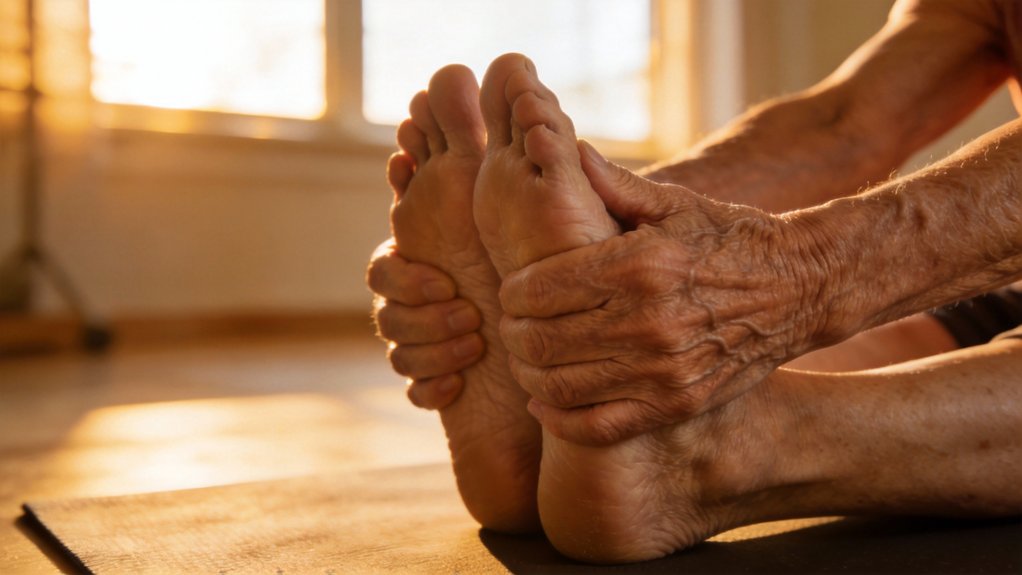
Let’s be direct about why this matters. Flexible, mobile seniors stay independent longer.
When you can bend, reach, and move comfortably, you can:
- Dress yourself without struggling
- Get in and out of your car safely
- Pick up items you’ve dropped
- Turn to look behind you when backing up
Research gives us specific numbers here: regular flexibility training reduces fall risk by 17-37% in older adults. That’s not a small difference. That could be the difference between a close call and a hip fracture that changes your life.
Beyond fall prevention, better flexibility improves your posture and balance. You’ll feel steadier on your feet. Daily activities become easier instead of exhausting.
We’re not chasing athletic performance here. We’re protecting your ability to take care of yourself and the people who depend on you.
2. Before You Start: The One Safety Rule You Can’t Skip
We have one safety rule: Never stretch cold muscles.
Walk around your house for 5 minutes, or do these stretches after your morning shower when your muscles are already warm. Cold stretching doubles your injury risk according to research on older adults.
Warm muscles stretch safely and effectively. This 5-minute investment protects you from injury.
3. If You Only Do 3 Stretches, Make It These
These three stretches target the areas that stiffen most from aging and sitting: backs of legs (hamstrings), fronts of hips (hip flexors), and chest and shoulders (from slouching).
Master these before worrying about anything else.
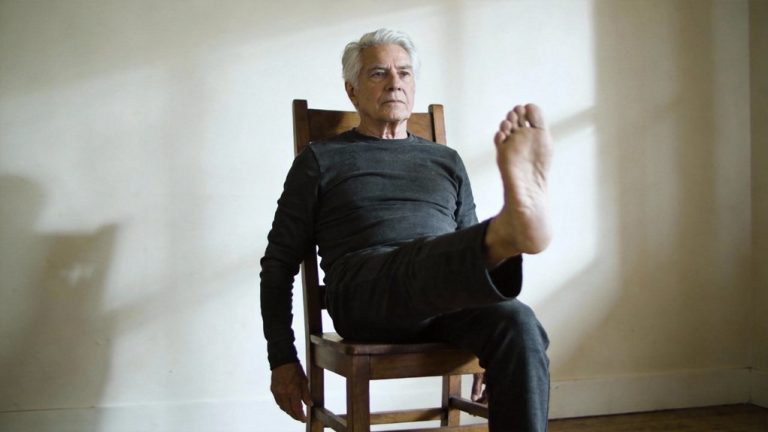
1. Hamstring Stretch (Seated Version)
What this helps: Bending down, tying shoes, picking things up off the floor
Setup: Sit on the edge of a sturdy chair. Extend your right leg straight with your heel on the floor and toes pointing up. Keep your left foot flat on the floor.
The stretch: Keep your back straight and lean forward from your hips. Don’t round your back. Reach toward your right foot.
Feel it where: Gentle pull behind your thigh, maybe behind your knee
Don’t feel it where: Sharp pain in your knee or lower back
Hold: 30-60 seconds while breathing normally
Switch: Repeat on your left leg
Can’t reach your foot? That’s completely normal. Loop a towel around your foot and hold both ends.
2. Hip Flexor Stretch (Standing)
What this helps: Walking comfort, getting up from chairs, reducing lower back stiffness
Setup: Stand next to a chair or counter for balance. Step your right foot back about 2 feet.
The stretch: Bend your left knee slightly and gently push your hips forward. Keep your torso upright. Don’t lean forward.
Feel it where: Front of your right hip and thigh
Don’t feel it where: Lower back or knee
Hold: 30-60 seconds while breathing normally
Switch: Repeat with your left leg back
Why this matters: Hours of sitting tighten these muscles every day, affecting how you walk and stand. This stretch counteracts that damage.
3. Shoulder & Chest Opener (Doorway)
What this helps: Reaching overhead, reducing rounded shoulders, getting items from high shelves
Setup: Stand in a doorway. Place your right forearm against the door frame with your elbow at shoulder height.
The stretch: Gently turn your body to the left, away from your arm.
Feel it where: Front of your shoulder, across your chest
Don’t feel it where: Sharp pain in your shoulder joint
Hold: 30-60 seconds while breathing normally
Switch: Repeat on your left side
Why this matters: This counteracts the forward slouch from sitting and makes overhead reaching easier and safer.
Research backing: Studies in Clinical Interventions in Aging show that holding stretches for 30-60 seconds produces optimal results for adults over 60. That’s why we recommend this specific timing.
4. Knowing the Difference: Good Tension vs. Stop Now
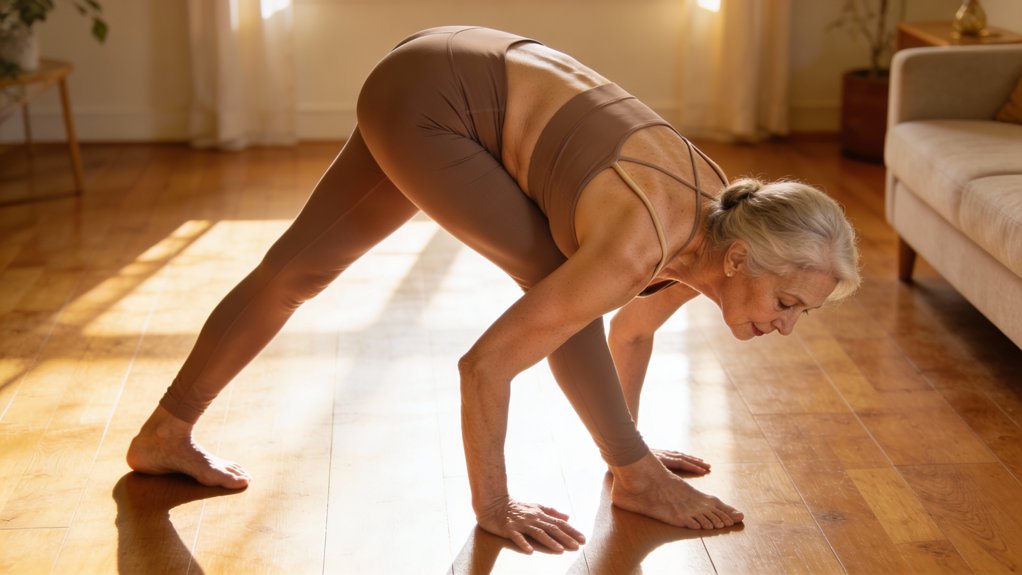
Your body will tell you what’s safe and what’s not. Here’s how to listen:
Normal (keep going):
- Mild, dull tension that eases slightly as you hold the stretch
- Feeling like the muscle is gently pulling but not painful
- Can breathe normally and comfortably
Stop immediately if you feel:
- Sharp or shooting pain
- Pain that gets worse while you’re holding the stretch
- Numbness or tingling
- Can’t breathe normally
Research shows that slow, controlled movements prevent injury. Rush nothing. Your body needs time to adapt.
5. How Often to Stretch & What to Expect
Starting out: 2-3 times weekly with the three core stretches
Better results: 4-5 times weekly (backed by research in the Journal of Gerontology)
Time commitment: 5-7 minutes per session, including your warm-up walk
Your Timeline
Week 1-2: Getting familiar with the movements. You might feel some muscle soreness, which is normal.
Week 3-4: You’ll notice easier movement in daily tasks. Bending down feels less stiff. Reaching feels smoother.
Week 8-12: The biggest improvements happen here. You’ll see measurable progress in how far you can comfortably reach and bend.
After 12 weeks: Maintain what you’ve gained with regular practice.
Set Realistic Goals
You won’t regain your 30-year-old flexibility, and that’s okay.
What you will regain is comfortable movement for daily tasks. That’s what actually matters.
Track your progress this way:
- Can you reach farther down your leg than before?
- Do you bend with less bracing against furniture?
- Can you turn to check your blind spot more easily when driving?
These real-world improvements matter more than how close you get to touching your toes.
Important: Gains typically level off around 8-12 weeks unless you increase difficulty. But maintaining what you’ve gained matters more than constantly pushing for more. Comfortable daily movement is the goal.
6. Beyond Stretching: Other Options
If you want variety or social connection, these activities also build flexibility:
- Yoga: Look for “gentle” or “senior” classes at your local community center
- Tai Chi: Slow, flowing movements that are excellent for balance
- Water aerobics: Community plus joint-friendly movement
- Swimming: Full-body stretch without any impact on your joints
These complement your stretching routine but aren’t required. The three core stretches done consistently will give you most of the benefits you’re looking for.
7. When to Check with Your Doctor First
Talk to your doctor before starting if you have:
- Recent joint replacement or surgery (within the past 6 months)
- Severe arthritis causing daily pain
- Osteoporosis diagnosis
- Balance disorders or frequent dizziness
- Recent injury that’s still healing
This isn’t medical advice, just protective caution. Most people can safely start gentle stretching, but your doctor knows your specific situation and health history.
8. Your Next Steps
Tomorrow: Take a 5-minute walk around your house to warm up, then try all three core stretches. Focus on form, not how deep you can go.
This week: Repeat 2-3 times. Notice which stretch feels tightest. That’s normal and will improve.
Week 2-3: Increase to 4-5 times weekly if you’re comfortable. The consistency matters more than the intensity.
Week 4: Pay attention to what’s getting easier in your daily routine. Putting on socks? Getting out of the car? These small wins add up.
Week 8-12: Evaluate your progress honestly. Can you move more comfortably than when you started?
Remember this: Consistency beats intensity every time.
Better to do these three stretches regularly than attempt complicated routines you’ll abandon after a week. You’re protecting your independence one gentle stretch at a time, and that work matters.
Start with your 5-minute warm-up walk tomorrow. Your future self will thank you.