Simple Balance Exercises to Prevent Falls
Your balance shifts, your stability wavers, your fall risk climbs, but you can reverse this. Falls aren’t inevitable as you age.
Simple exercises like sideways walking and single-leg stands rebuild the strength and coordination you’ve lost. You’ll discover how thirty seconds of self-assessment reveals your actual risk level.
Let’s explore what transforms wobbly confidence into steady movement.
Why Balance Gets Harder: and Why It Matters
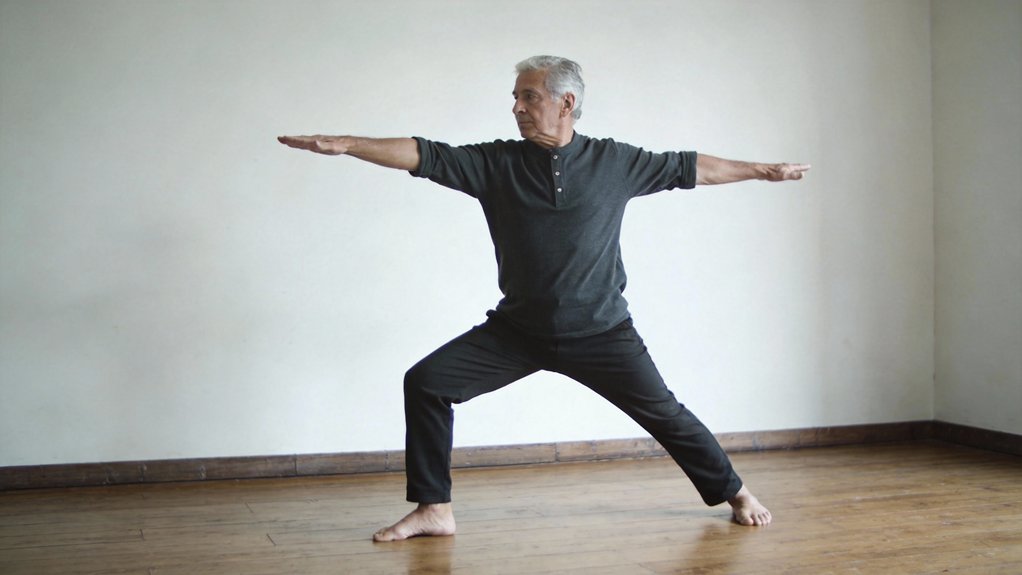
As you get older, your body changes in ways that make staying balanced tougher. Your muscles weaken, flexibility decreases, and your coordination naturally declines.
As you age, your muscles weaken, flexibility decreases, and coordination naturally declines, making balance increasingly difficult.
These age related changes directly affect your stability.
Your senses also shift. Vision becomes less sharp, and proprioception, your body’s awareness of itself in space, fades.
Your reflexes slow down too, making it harder to catch yourself when you stumble.
The numbers matter: one in four adults over sixty-five falls yearly. That’s significant. Additionally, inactivity can create a cycle that further deteriorates your balance and increases fall risk even more.
Balance improvement through regular exercise directly counters these declines. You can strengthen your stability and reduce fall risk substantially by staying active and intentional about your movement.
Find Out Your Fall Risk in 30 Seconds
The CDC gives you a quick way to check your fall risk using just three straightforward questions.
- First, ask yourself: Have I fallen in the past year?
- Second: Do I feel unsteady when standing or walking?
- Third: Am I worried about falling?
If you answer yes to any of these, you’ve identified important risk factors.
Research shows that people reporting unsteadiness are considerably more likely to fall.
Your honest answers matter because they guide you toward needed help.
Fall assessment doesn’t require expensive tests or long appointments. Taking thirty seconds now helps you stay independent and safe later.
Physical limitations like decreased mobility and balance issues are common concerns as people age, making fall prevention exercises an essential part of maintaining quality of life.
Set Up a Safe Home Exercise Space
Your home exercise space needs a solid foundation before you start any balance work.
Think of your exercise area as a dedicated zone where you’ll focus on building strength and stability.
You’ll want to establish safety measures that protect you while you train:
- Clear clutter and tripping hazards from your workout zone
- Install bright lighting to improve visibility during exercises
- Wear non-slip shoes for ankle support and grip
- Position sturdy furniture like chairs within arm’s reach
- Keep water bottles and towels nearby for convenience
These practical steps create an environment where you can concentrate on balance work without worrying about accidents or interruptions.
Sideways Walking: Your First Easy Balance Exercise
Sideways Walking: Your First Easy Balance Exercise
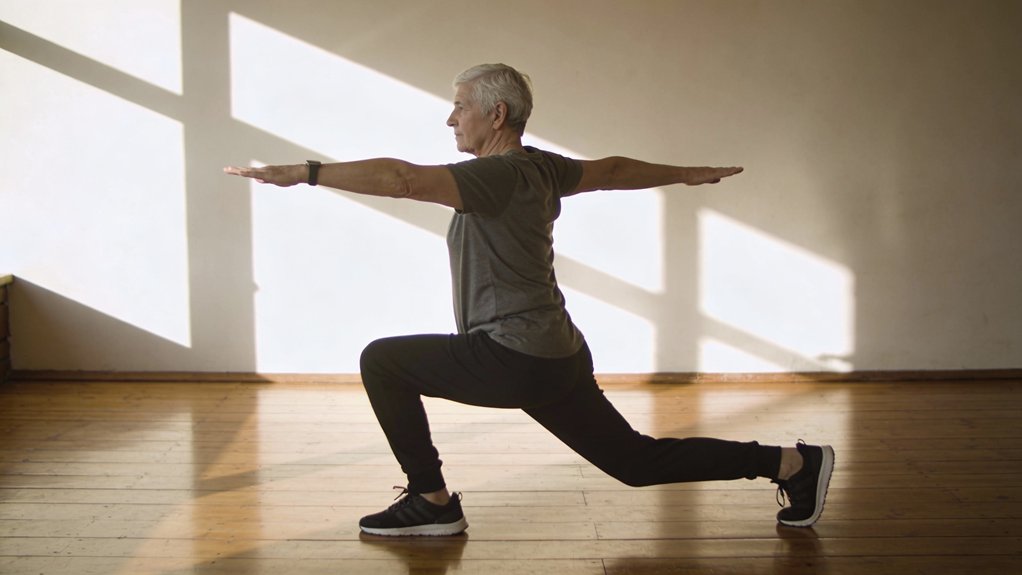
One of the best ways to build balance is sideways walking, and it’s simple enough for anyone to start today. This sideways technique targets your lateral movement muscles, strengthening stability in directions you don’t usually move.
Stand with feet together, then step slowly sideways while keeping your hips level. Complete ten steps in each direction for effective muscle engagement.
Your body learns to stabilize itself against falls with this controlled motion. If you need extra support, lightly touch a wall with your fingertips.
Regular sideways walking markedly improves your overall mobility and considerably reduces fall risk over time.
Heel-to-Toe Walking for Steady Forward Movement
After you’ve mastered sideways walking, heel-to-toe walking takes your balance training to the next level. This heel to toe technique challenges your stability by placing your heel directly in front of your other foot’s toes.
Here’s how to practice effectively:
- Walk in a straight line for at least 20 steps
- Keep your gaze forward to maintain focus
- Use a wall or sturdy furniture for support initially
- Practice regularly to build confidence
- Progress gradually as your balance improvement increases
Your body control strengthens considerably with consistent practice.
This exercise directly reduces fall risk by enhancing stability.
You’ll notice improved coordination and steadier movement patterns over time.
Single-Leg Stands to Build Leg Strength
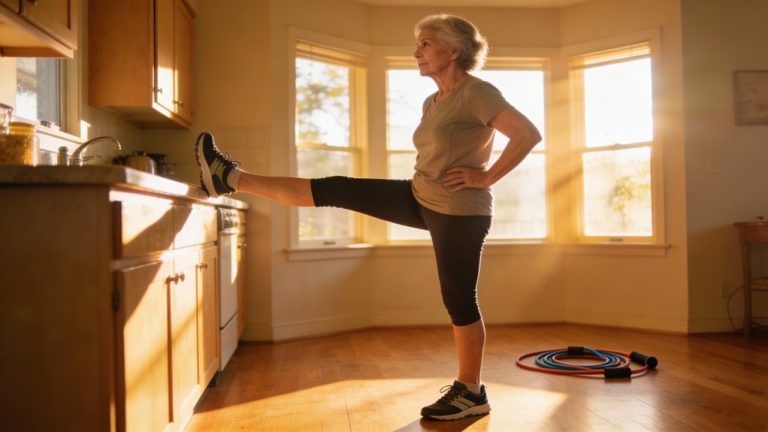
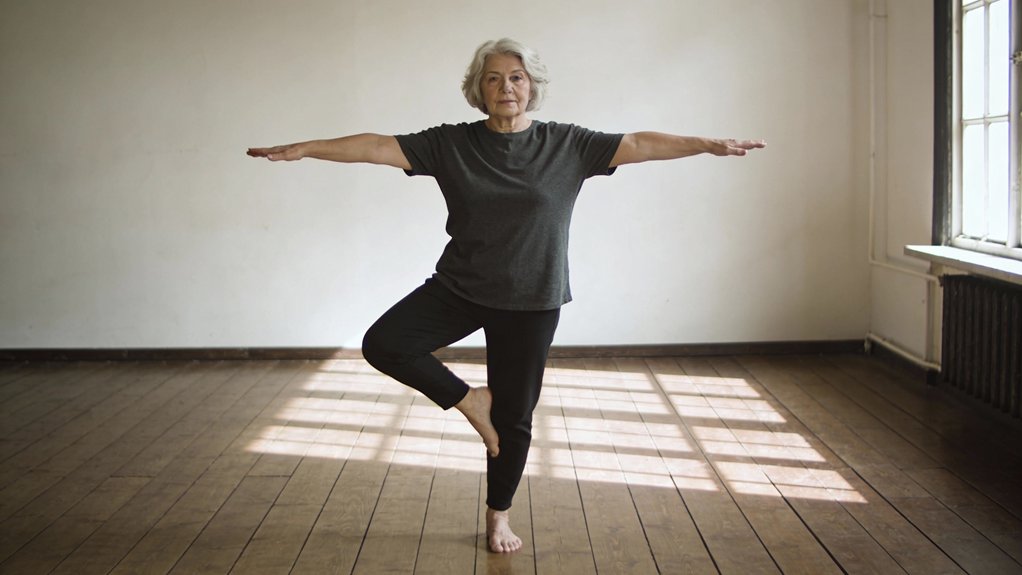
Single-leg stands build serious lower body strength while you challenge your balance in a whole new way.
Hold onto a sturdy chair or countertop for support. Lift one leg off the ground and maintain balance for up to 60 seconds.
As your strength improves, gradually increase your hold duration. Practice three sets on each leg to build endurance.
Single leg variations and balance progression become easier with consistent practice. You’ll enhance coordination and proprioception, reducing fall injury risks.
These stands improve functional mobility, making everyday activities safer and easier for the seniors you care about.
The Grapevine: A Balance Exercise for Lateral Control
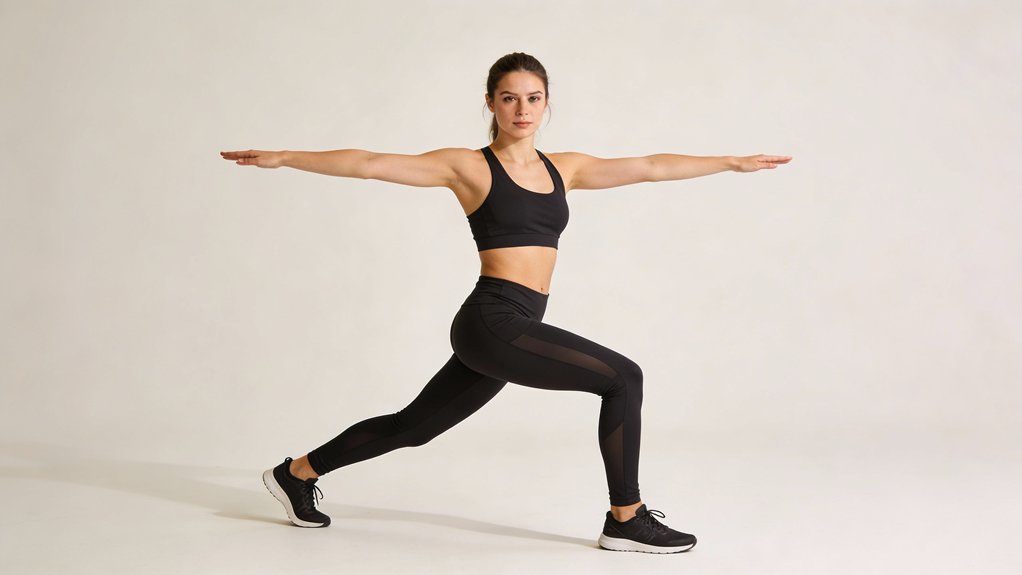
The Grapevine: A Balance Exercise for Lateral Control
The grapevine exercise builds lateral balance by having you walk sideways while crossing one foot over the other in a steady, controlled pattern. This grapevine technique strengthens hip muscles and improves your lateral stability markedly.
Here’s how to perform it effectively:
- Start with your right foot crossing over your left
- Complete five cross-steps moving in one direction
- Reverse direction and repeat five steps the opposite way
- Use fingertips against a wall for extra support if needed
- Practice regularly to enhance coordination and prevent falls
You’ll notice improved responsiveness to unexpected weight shifts and directional changes as your body adapts to lateral movements.
Step-Ups With Support to Strengthen Your Legs
Building stronger legs doesn’t require fancy equipment, just a sturdy step and something solid to hold onto.
You’ll start by stepping up with one leg, then bringing your second leg up to meet it. Keep movements slow and controlled throughout.
Aim for up to five repetitions per leg initially, then gradually increase as you build confidence.
Step up variations help target your quadriceps, hamstrings, and calves: muscles essential for balance and fall prevention.
Increase Your Reps and Difficulty Safely
Once you’ve mastered the basics of step-ups and simple balance work, you’re ready to progress.
Your repetition progression matters more than speed. Consider these safe advancement strategies:
Your repetition progression matters more than speed. Build confidence through gradual advancement, not quick jumps.
- Start with 5-10 reps, gradually building toward 15-20 as you grow stronger.
- Progress from two-leg stances to challenging single-leg variations.
- Use chairs or countertops for stable support during harder exercises.
- Maintain strict form and control throughout every movement.
- Track your reps and duration to monitor improvement.
These exercise variations build confidence while keeping you safe.
Moving slowly prevents injuries and guarantees lasting gains.
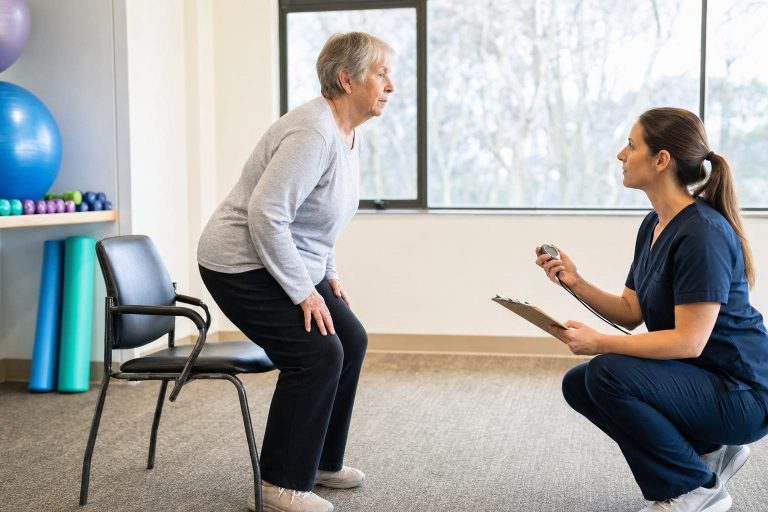
Signs You Need Help From a Physical Therapist
How do you know when it’s time to bring in a professional? Watch for signs of instability like frequent falls or unsteadiness.
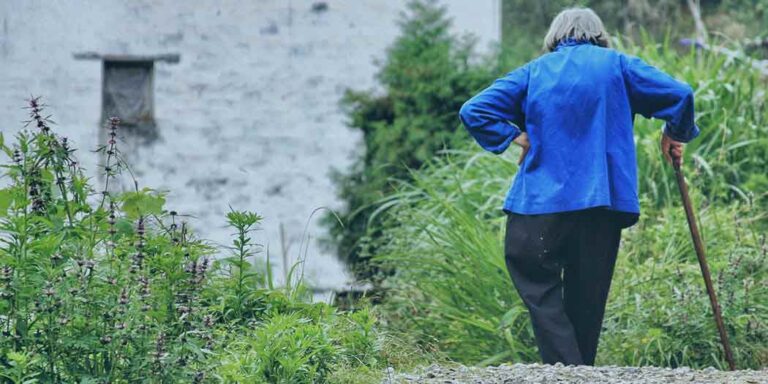
If you’re using a walker or cane regularly, you’d benefit from professional guidance.
Existing conditions like arthritis that limit daily activities signal you need support. Severe pain that restricts your movement requires attention.
You’re also a candidate if you feel uncertain performing balance exercises safely.
Physical therapist benefits include tailored rehabilitation programs and personalized assessments.
These professionals evaluate your specific needs and recommend appropriate interventions.
Don’t hesitate to seek help when you recognize these warning signs.