Why Older Adults Feel the Cold More (and What Actually Helps at Home)
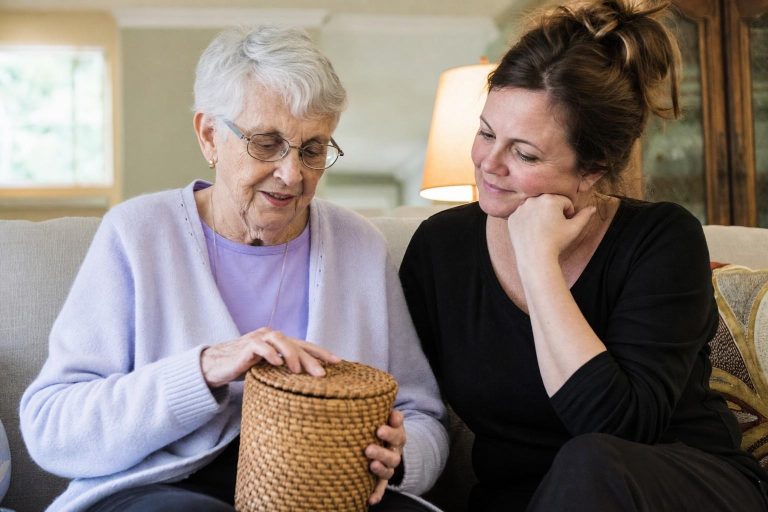
A parent bundled in a cardigan while everyone else in the room is comfortable in a T-shirt is a familiar scene in plenty of households.
It is tempting to read that as fussiness.
It is a real, physical change in how the body handles heat, not stubbornness.
Aging changes how the body makes and holds onto heat. According to the National Institute on Aging, changes that come with age can also make it harder to notice the body getting too cold.
A room that feels perfectly fine to a 40-year-old can leave someone in their 70s or 80s genuinely cold.
This article covers why that happens. It also covers what actually helps: warming the person and the space near them, indoors and at night, rather than just running the furnace harder.
Why aging bodies lose heat faster
The body stays warm through a few systems working together, and aging affects all of them at once.
Three physical changes, not willpower or preference, explain most of it.
- The layer of fat just under the skin thins with age, so less natural insulation is left to hold heat in
- Circulation slows down, so warm blood does not reach the hands and feet as efficiently
- Muscle mass tends to shrink, and muscle produces heat simply by being active, so less background heat gets produced even at rest
None of this is a flaw to fix.
It is ordinary aging, and the fixes below focus on adding warmth back rather than pushing through it.
Indoor cold is a real risk, not just discomfort
It is easy to assume cold is only uncomfortable indoors, not dangerous.
That is not quite true. About 20% of injuries related to cold exposure happen inside the home, the National Institute on Aging notes.
The National Institute on Aging says even mildly cool homes, with temperatures from 60 to 65 degrees Fahrenheit, can lead to hypothermia in older adults.
It does not take a broken furnace or a snowstorm.
Setting the heat to at least 68 degrees Fahrenheit is the National Institute on Aging’s own baseline for staying safe indoors, not just comfortable.
This is not meant to be alarming.
Most cold days at home end in nothing worse than someone reaching for a blanket. But it is worth taking seriously, especially for anyone who lives alone or spends long stretches sitting still.
The National Institute on Aging lists several early warning signs. They include cold hands and feet, a puffy or swollen face, pale skin, shivering, slowed or slurred speech, and feeling sleepy or confused. Any of those, in a cold room, is worth checking on right away.
Hypothermia affects the brain itself, the National Institute on Aging points out, so the person experiencing it often does not realize anything is wrong. That is exactly why a check-in from someone else matters, not just a thermometer.
For anyone checking on a parent or older neighbor, a quick call during a cold snap can catch a cold house early.
Conditions and medicines that make it worse
Feeling the cold more is often just aging, and it usually builds gradually over the years.
Sometimes something else is layered on top of it, and that tends to show up faster.
The National Institute on Aging names several conditions that make it harder to stay warm. Diabetes can affect normal blood flow. Thyroid problems can affect the body’s ability to hold a normal temperature.
Parkinson’s disease and arthritis add a different kind of risk: the physical difficulty of adding a layer or reaching for a blanket.
Medications matter too. The National Institute on Aging notes that some medications, both prescription and over the counter, including some cold medicines, can affect body heat. It recommends asking a doctor whether a current medication could be a factor.
A sudden or new sensitivity to cold is worth mentioning to a doctor.
Thyroid problems, anemia, and some medications can be behind a real change, not just aging on its own. This is not a diagnosis, just a reason to ask rather than assume, and most causes turn out to be manageable once identified.
Warm the person, not just the house
Cranking the thermostat is the instinct, and it is not wrong.
It is just not the most effective place to start.
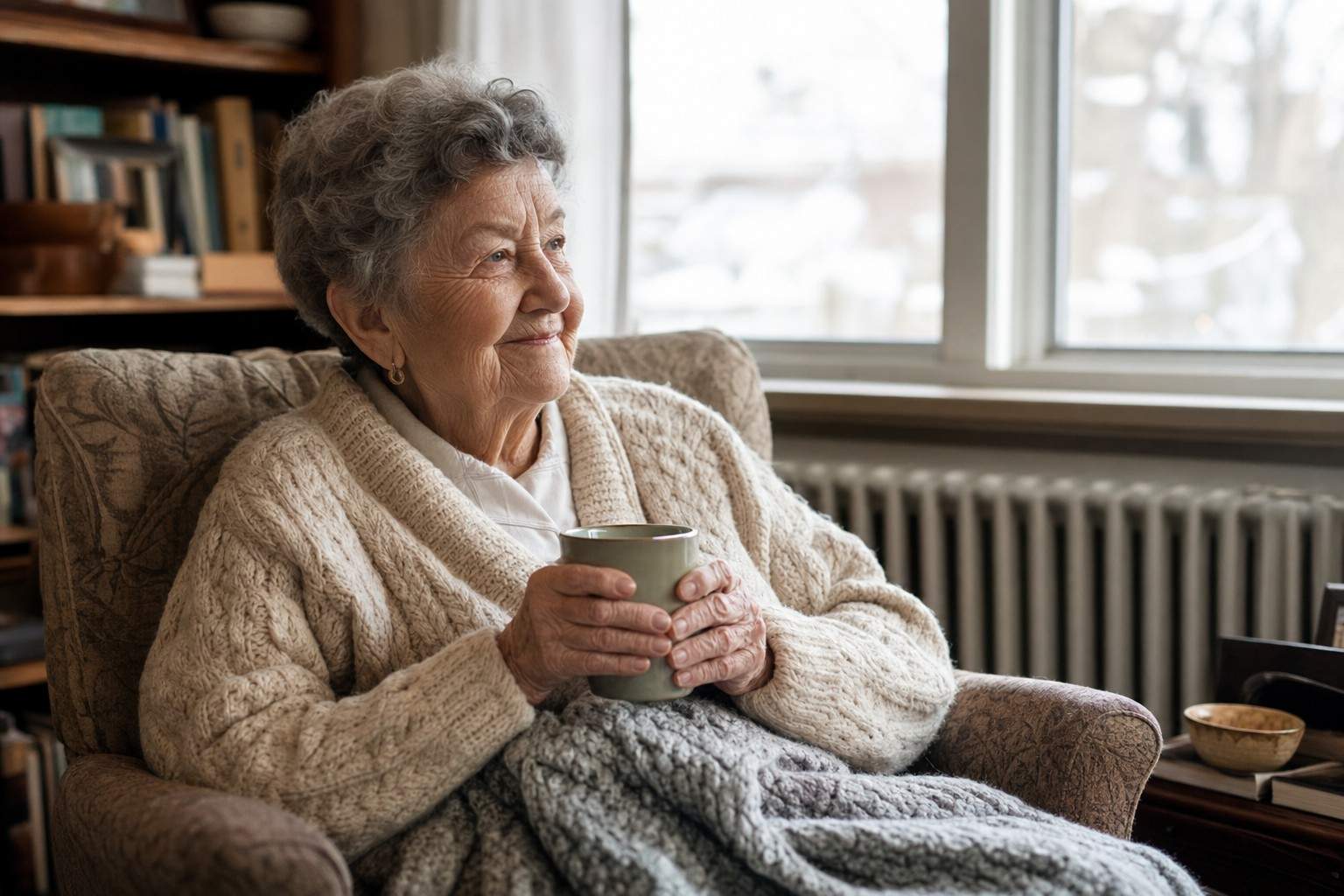
Warming the person directly works faster and costs less than heating an entire house. Layers trap body heat close to the skin, where it actually helps. Warm socks, a sweater, and a lap blanket during the day do real work.
Layered warmth close to the skin heats a person faster than raising the thermostat a few degrees.
For evenings on the couch or hours spent reading, an electric blanket adds steady warmth where someone is sitting, instead of warming an empty room.
Cold hands, feet, or stiff joints respond well to targeted heat too. Pairing a heating pad with layers, rather than using either alone, keeps that warmth exactly where it is needed.
Nighttime cold needs its own plan
Bedrooms often run colder than the rest of the house, especially late at night when the heat cycles down.
A body that is already producing less heat overnight has less reserve to draw on when a bedroom gets cold.
Stiff joints and cold hands or feet at 3 a.m. are common.
They can make getting up feel less steady than during the day.
A few small habits help:
- Warm sleepwear and a blanket layer that can be added or removed mid-sleep, without needing to get up
- A robe kept within reach of the bed, so less time is spent cold before getting properly covered
If getting in or out of bed already feels uncertain, a cold 3 a.m. trip to the bathroom is exactly when that matters most. Having a bed rail nearby gives something solid to hold onto at the moment balance is least reliable.
Make the room work without heating the whole house
A few adjustments to one room do more than adjusting the thermostat for the whole house.
Blocking drafts around windows and doors is often worth more than raising the temperature a few degrees.
A rolled towel at the bottom of a door or heavier curtains at night both help a room hold onto warmth it already has.
A small space heater, used carefully, can bring one chair or one bed up to a comfortable temperature.
That works without running the furnace harder for the entire house.
Basic space heater safety is worth repeating every winter:
- Keep it a safe distance from anything flammable
- Keep it out of walkways and foot traffic
- Never leave it running unattended or overnight
For a broader look at making a home comfortable room by room, a guide to creating a senior-friendly home covers more than just temperature.
Where indoor care ends and outdoor care begins
Everything above is about staying warm at home, day and night.
Outdoor cold is its own subject, with its own rules.
Dressing for cold outside calls for different choices than dressing for a cold living room.
Wind, wet ground, and longer exposure change the math.
A separate guide on staying warm outdoors in a wheelchair covers that ground directly. The short version indoors: keep the person warm first, keep the immediate space warm second, and let the thermostat handle the rest of the house.
The bottom line
Running colder is not something to push through or apologize for.
It is a normal, physical part of aging, and it responds well to the right fixes.
None of this requires a big renovation or a new furnace. An electric blanket, a heating pad, a draft blocker, and a bit of attention at night cover most of it.
Warm the person directly, warm the room they are using, and treat a sudden change in cold sensitivity as worth a call to the doctor.