Bathing Safely With Limited Mobility
No room in a house causes more falls than the bathroom.
Hard floors, standing water, and a tub or shower rim combine in a way no other room does.
Falls among older adults are rarely about one bad step.
Balance breaking down at the wrong moment matters more. That is the focus of National Institute on Aging research into falls and fractures.
The bathroom is where that moment shows up most often.
The National Institute on Aging gives the room its own dedicated advice in its guidance on preventing falls at home, room by room.
Most of that risk shows up in four moments.
You step over the rim, stand on a wet surface, turn in a tight space, and reach for soap or a faucet.
Walk through those in order, and one change stands out above the rest.
Sitting down for the whole wash, instead of standing the entire time, takes the biggest risk out of the equation before it can happen.
Getting over the rim is the first risk
Every bath or shower starts with the same move: lifting one leg over a rim while balancing on the other.
That single step causes more trouble than people expect, especially first thing in the morning when muscles are stiff.
A shower transfer bench removes that step entirely.
The bench seat straddles the tub wall.
You sit down outside the tub, then slide across into the shower without lifting a leg over the rim at all.
A hip or knee replacement makes that lift especially hard on its own.
In that case, a shower transfer bench turns the rim into a seated slide instead of a balancing act.
If a full bench does not fit the space, a rubber-backed mat just outside the tub gives that first step something to grip.
The National Institute on Aging’s guidance calls out nonskid mats or strips for every bathroom surface that may get wet.
That includes the floor just outside the tub, right where wet feet meet a hard floor.
Standing on wet tile is the real danger
Once inside, the danger does not stop.
Wet tile and the floor of a tub or shower pan are some of the most slippery surfaces in the house.
That gets worse once soap is in the mix.
Balancing on one leg to wash the other foot asks a lot of anyone’s balance.
So does standing still with your eyes closed while rinsing shampoo.
A non-slip mat or textured strip on the tub or shower floor is one of the simplest bathroom fixes there is.
The National Institute on Aging recommends nonskid mats or strips on the tub or shower floor itself, not just around it.
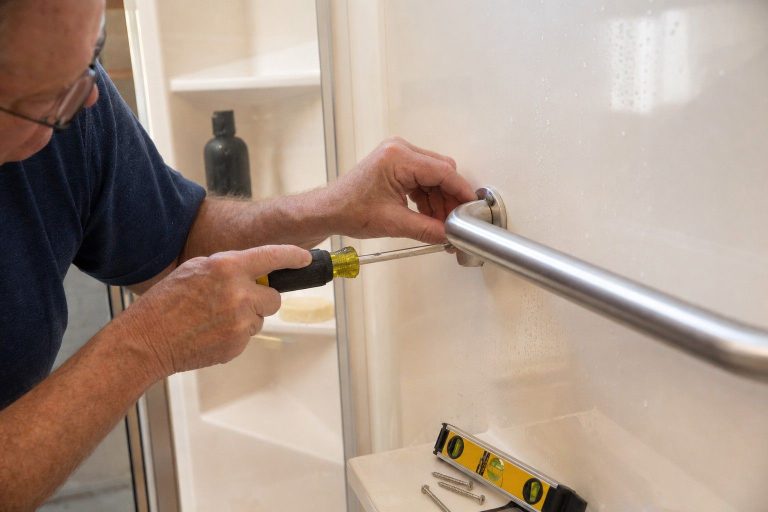
A grab bar mounted at shoulder height inside the shower gives you something solid to hold the moment your footing feels off.
A towel bar or soap dish was never built to hold that kind of weight.
Sitting down removes the biggest risk
Here is the single biggest change most people can make: bathe sitting down instead of standing.
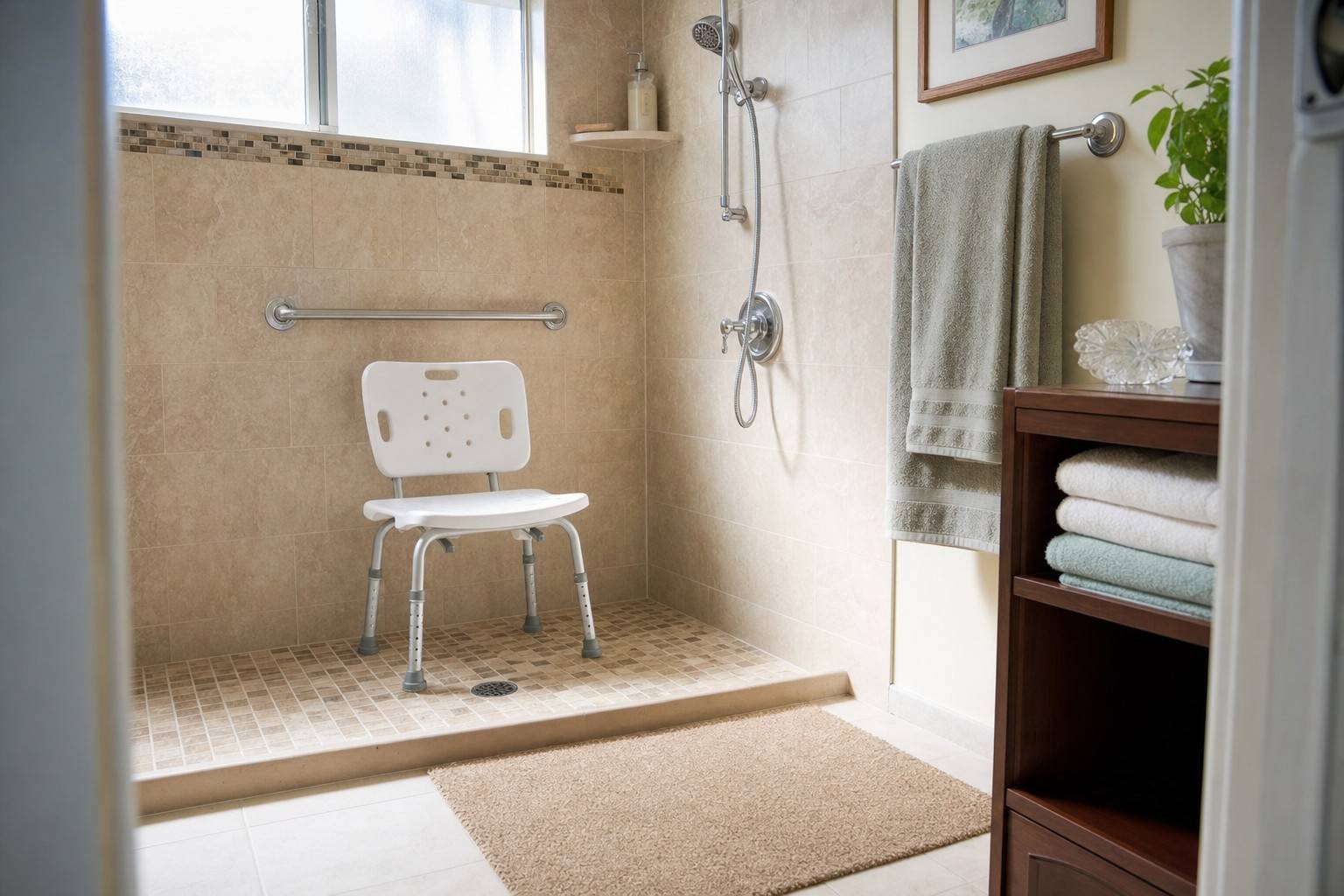
A shower seat or bath chair inside the tub means you are never balancing on wet feet in the first place.
You wash, rinse, and shampoo from a stable seated position.
Slipping while standing simply cannot happen during the part of bathing that used to take the longest.
Most bathroom falls start with standing on a wet surface.
A seated wash takes wet-tile balance completely out of play for the entire time you’re bathing.
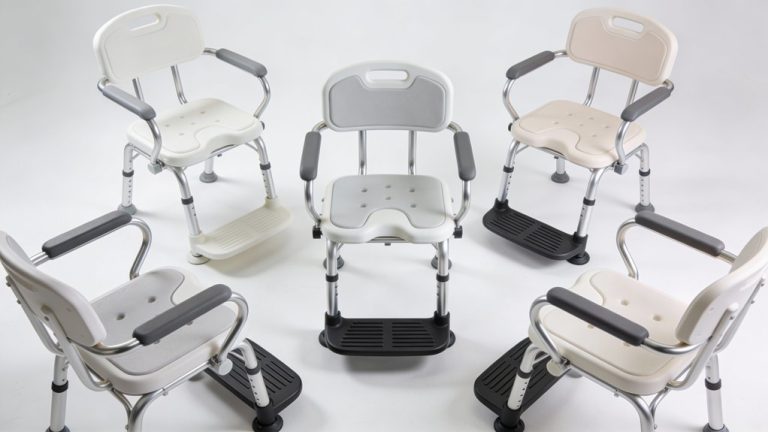
Bath chairs and shower seats range from a simple stool to a padded bench with a back and armrests.
A few things matter when choosing one:
- Look for a weight rating that fits you.
- Choose feet that grip the tub floor rather than suction cups alone.
- Measure the tub first, since well-fitted bath chairs and shower seats sit more securely than one picked by guesswork.
This change does not require new plumbing or a remodel. It is a piece of equipment you can set up in an afternoon.
Turning and reaching are where falls happen next
Even sitting down, two more moments matter: turning to reach the faucet or a shelf, and reaching for something just out of range.
Turning on a wet floor, even a small pivot, is a common way a fall starts.
A grab bar placed exactly where you naturally reach to stand or turn matters more than any number of non-slip mats.
It gives your hand something to find without having to look for it first.
Where you can mount that bar depends on your wall.
- Tile over cement board usually takes a bar bolted straight into the studs or backing behind it.
- Fiberglass and acrylic shower units need a different approach, since the bar has to anchor through a thinner shell without cracking it. This guide on installing a grab bar in a fiberglass shower walks through how that works.
- Renters, or anyone who cannot drill into the wall, can look at suction-mounted bars instead. It is worth checking whether suction grab bars actually work on drywall before you trust one near a tub.
A physical therapist can walk through your bathroom with you if a specific condition limits how far you can safely turn or reach.
They can point out adjustments that fit your exact situation, which beats guessing on your own.
Look at the whole bathroom, not just the tub
A safer tub or shower is the biggest piece. But a few things outside it matter too.
A rubber-backed bath mat outside the tub stops that first step out from becoming its own hazard.
A nightlight removes the need to navigate in the dark for a middle-of-the-night trip to the toilet.
The National Institute on Aging treats the bathroom as one stop on a room-by-room walk through the whole house.
That framing holds up in practice.
A grab bar by the toilet, good lighting, and a slip-resistant bath mat all work together with the changes inside the tub.
The rest of the house matters too, including hallways, stairs, and the bedroom.
For a fuller walkthrough of every room, see this room-by-room guide to a senior-friendly home.
Bottom line
Bathing safety comes down to a handful of moments: getting over the rim, staying steady on wet tile, turning, and reaching.
Fix the entry with a transfer bench, fix the standing with a shower seat, and add grab bars where you actually turn and reach.
Sitting down for the whole wash is still the single biggest change on this list.
It takes the most dangerous part of bathing out of the equation, rather than just making that part a little safer.
None of this requires a remodel.
A bath chair, a couple of grab bars, and a non-slip mat cover most of the risk.
All three can be in place within a week.