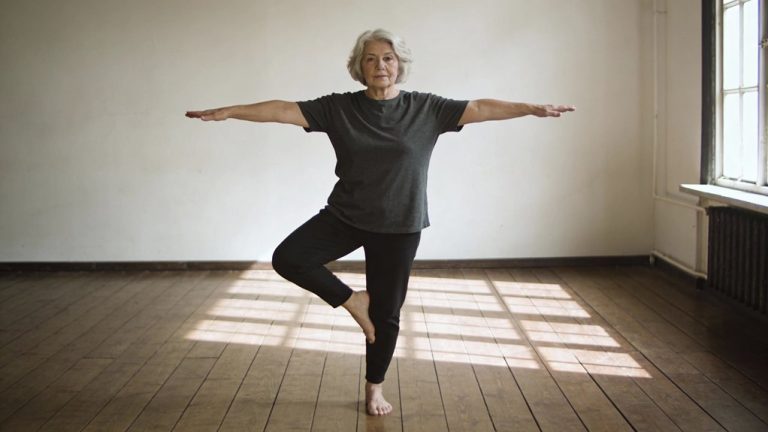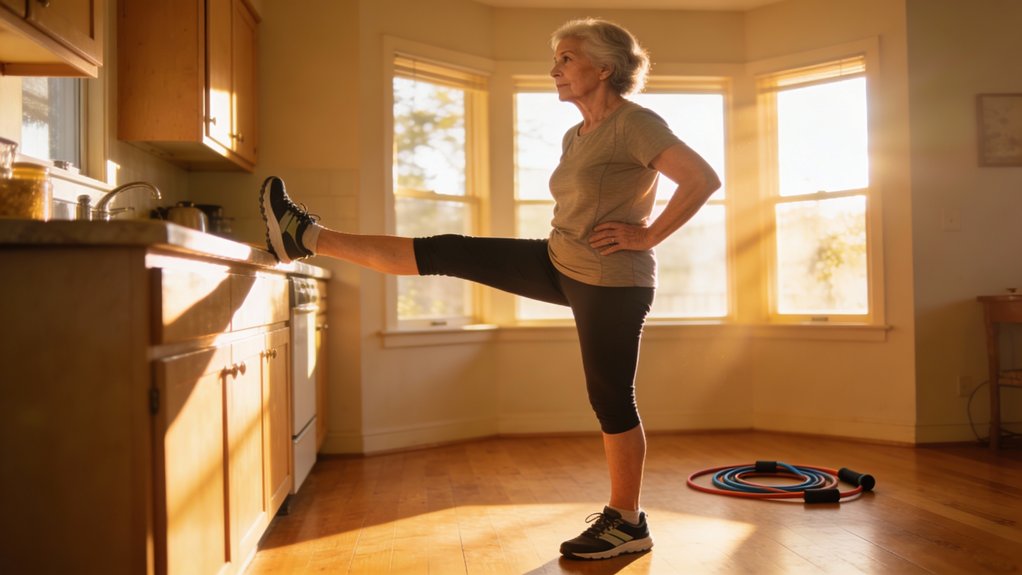
How to Build Leg Strength for Seniors at Home
Your legs carry you through life, yet many seniors neglect them until mobility becomes a problem. You can reverse this trend right at home with straightforward exercises requiring just 10-15 minutes, twice weekly.
Chair squats, calf raises, and leg lifts rebuild the strength you’ve gradually lost. Within four to six weeks, you’ll notice real differences in how you move and climb stairs.
But here’s what most people get wrong about form, and it matters more than you’d think.
Why Leg Strength Declines (And Why It Matters)

As you get older, your legs naturally lose strength: it’s not imagination or laziness, it’s a real biological process.
After age 50, you lose roughly 15% of muscle strength each decade due to decreased activity and hormonal changes.
After 50, muscle strength declines 15% per decade from reduced activity and hormonal shifts.
This age-related decline, called sarcopenia, affects your ability to walk, stand, and climb stairs.
Without muscle maintenance through exercise, you’ll struggle with basic daily tasks.
Stronger legs mean better balance and stability.
Studies show that improved lower body strength reduces your fall risk by up to 30%.
Building leg strength now protects your independence and quality of life for years ahead.
5 Essential Home Exercises for Seniors
The five exercises below form a solid foundation for building leg strength at home, and you’ll need nothing fancy to get started.
You can perform these movements safely using basic household items like a sturdy chair. Each exercise targets different leg muscles, working together to improve your balance and stability for daily activities.
- Chair squats benefits include building strength while mimicking natural standing movements you do every day.
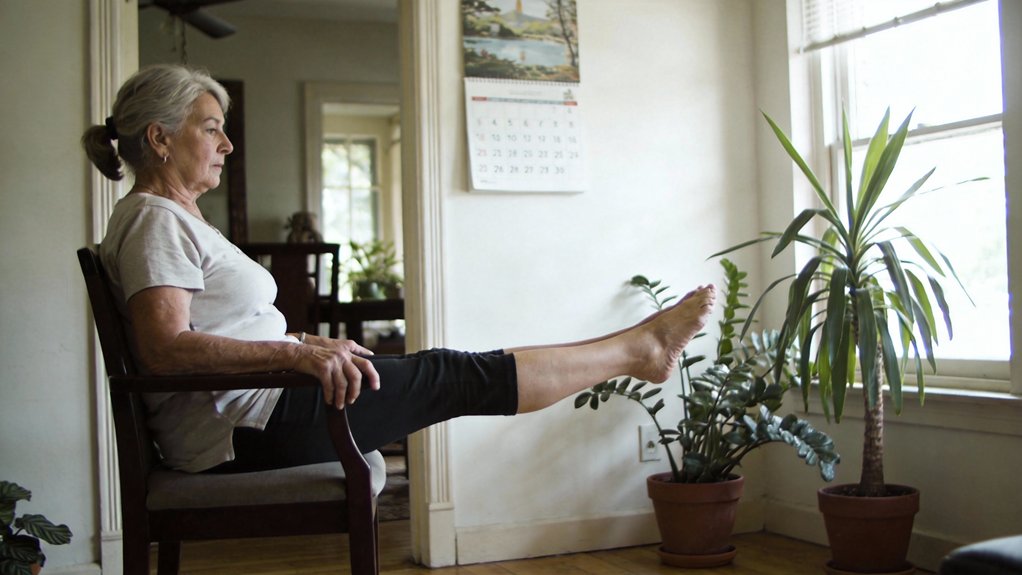
- Seated leg extensions strengthen your quadriceps without requiring mobility or complicated equipment.
- Calf raises enhance ankle strength using chair support for safety.
- Hamstring curls and side leg lifts promote overall stability and reduce fall risk.
Strengthening your legs through consistent exercise helps counteract the strength loss that naturally occurs with aging and is essential for maintaining independence.
Safe Exercise Form: Common Mistakes to Avoid
Now that you’ve learned the five key exercises, it’s time to focus on performing them correctly. Proper alignment prevents injury: keep your knees behind your toes during squats and lunges.
Proper alignment prevents injury: keep your knees behind your toes during squats and lunges.
Don’t lock your knees at the top of movements; maintain a slight bend instead. Core engagement stabilizes your body throughout each exercise, protecting your lower back.
Move slowly and deliberately rather than rushing through reps. Use a sturdy chair or wall for balance support when you need it.
Controlled movements enhance muscle engagement and reduce fall risk greatly. These adjustments transform your workouts from risky to genuinely beneficial.
Your Weekly Schedule for Leg Strengthening
Building leg strength works best when you stick to a consistent schedule. You’ll want to dedicate two to three days weekly to leg exercises, spacing them out to allow recovery time between sessions.
Each workout should last just 10-15 minutes, making it manageable and sustainable. Your weekly schedule benefits from exercise variety: mixing chair squats, calf raises, and seated leg extensions targets different muscle groups effectively.
Start each session with five to ten minutes of light walking and dynamic stretches. Track your reps and sets weekly, gradually increasing intensity as you grow stronger.
Key elements for success:
- Schedule workouts on non-consecutive days
- Complete warm-ups before every session
- Mix different exercises for balanced development
- Monitor progress through weekly repetition counts
When to Expect Results and Progress Safely
If you’re consistent with your workouts, you’ll probably notice real changes within 4 to 6 weeks.
Consistency pays off—expect to see real fitness changes within 4 to 6 weeks of regular workouts.
Your results timeline depends on how often you exercise and your starting fitness level.
Progress tracking helps you stay motivated and see actual improvements. Write down how many repetitions you complete or how long you hold each exercise.
Increase intensity by just 10% weekly to stay safe and avoid injury. This gradual approach builds strength steadily.
Consult your healthcare provider before starting any new routine, especially if you have existing health concerns.
Safety always comes first when you’re helping yourself get stronger. Remember that low-impact exercises like walking can complement your home leg strengthening routine while being gentle on your joints.