Chair Exercises for Seniors With Limited Mobility
You want to stay active, but traditional workouts feel impossible right now. Chair exercises change that equation.
You can build real strength, improve your balance, and move with more ease, all while seated in your living room.
The catch? You need to know which moves actually work and how to do them safely.
Let’s talk about what that looks like for you.
Safety First: Choose the Right Chair and Space
Before you start any chair exercise routine, you’ll want to set yourself up for success by choosing the right equipment and environment.
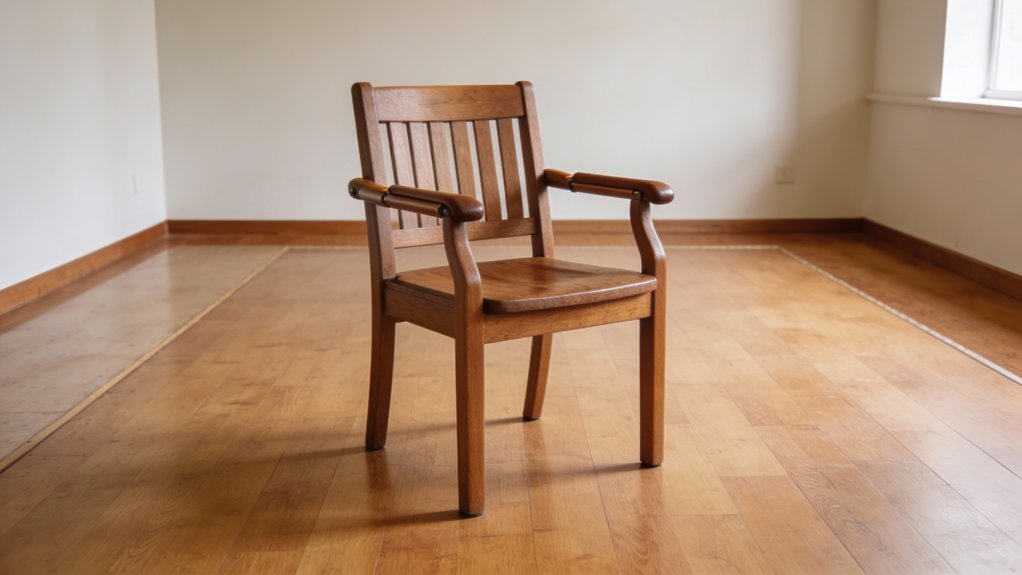
Select a sturdy chair without wheels and a firm seat for proper chair stability. Make certain it has a backrest to support good posture.
A sturdy chair without wheels and a firm seat with backrest support ensures proper stability and good posture during exercise.
Position your chair on a flat, non-slippery surface to prevent sliding. Your feet should rest flat on the floor with knees at ninety degrees.
Clear your exercise space of clutter and hazards to maximize exercise safety.
These straightforward preparations help you move confidently and reduce fall risks during your routine.
Common Mistakes to Avoid Before You Start
Three critical mistakes can derail your chair exercise routine before you even begin.
You’ll want to avoid these common pitfalls:
- Skipping consultation with your healthcare provider about your specific health conditions
- Selecting an unstable chair with wheels or inadequate back support
- Ignoring your personal mobility limitations and pushing too hard initially
Consultation importance can’t be overstated. Your doctor catches potential risks you might miss.
Chair stability matters tremendously: use a sturdy, armless chair with solid back support.
Finally, listen to your body. Gradual progression beats aggressive intensity every time.
These foundational steps protect your joints and maximize your results safely. Understanding your balance problems and mobility issues can help you choose appropriate exercises that won’t exacerbate existing conditions.
Upper Body Strengthening: Seated Arm Exercises
Now that you’ve laid the groundwork with proper chair selection and realistic expectations, your upper body’s ready for some strengthening work.
- Seated arm curls build your biceps and forearms, helping you lift groceries and reach high shelves.
- Perform arm raises to boost shoulder flexibility and overall upper body function.
- Arm circles engage your shoulders and core muscles simultaneously, improving stability.
These exercises reduce fall risk by enhancing balance and coordination.
You’ll notice better mobility within weeks of consistent practice.
Start with light movements, then gradually increase repetitions as you build strength and confidence in daily activities.
Build Core Strength and Better Posture
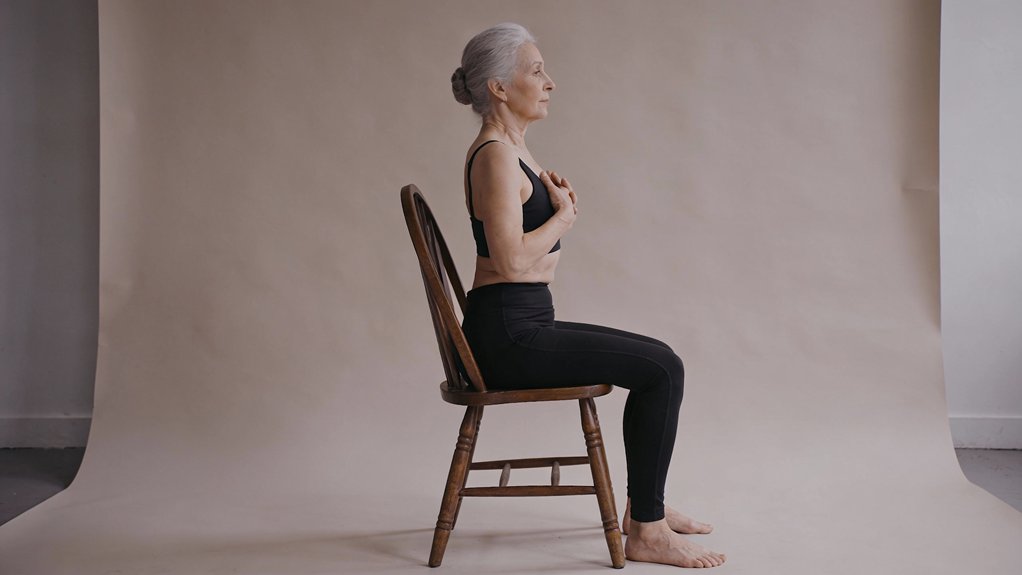
Build Core Strength and Better Posture
Your core muscles, the deep abdominal and back muscles that wrap around your torso, are like the foundation of a house.
When you strengthen them through chair exercises, you’re building stability for daily activities. Core engagement during seated marches and pelvic tilts creates powerful support for your entire body.
Here’s what you’ll gain:
- Improved posture that reduces back pain and strain on your spine
- Enhanced balance and stability for safer movement throughout your day
- Greater confidence and independence when performing everyday tasks
Regular core work helps you sit taller, move easier, and support others with renewed strength and reliability.
Lower Body Workouts: Seated Leg Exercises
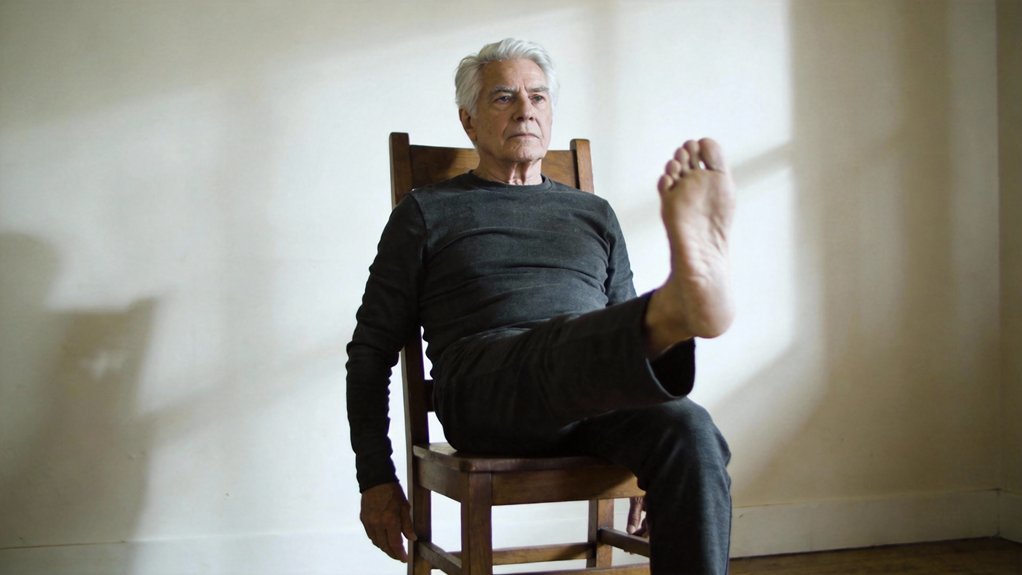
Seated leg exercises like extensions and marches are game-changers for building lower body strength while you’re sitting down.
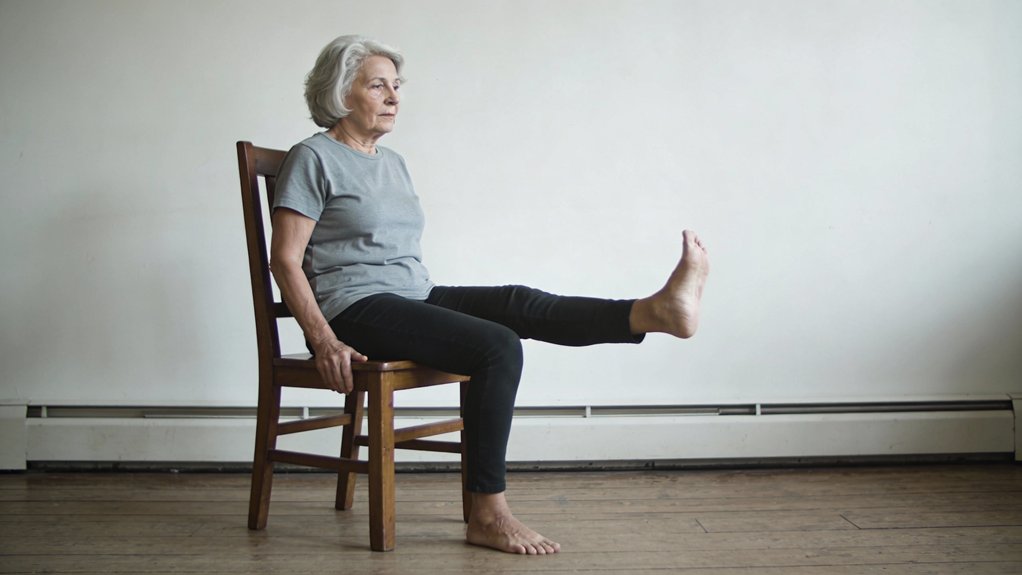
Seated leg extensions target your quadriceps effectively. Seated marches engage your hip flexors and improve coordination.
Seated leg extensions build quadriceps strength while seated marches engage hip flexors and enhance coordination.
You’ll notice better stability and reduced fall risk as you practice regularly. These workouts require minimal equipment: just a sturdy chair works fine.
Better circulation follows consistent practice, reducing stiffness in your legs and feet. You’re strengthening the muscles needed for daily tasks like standing and walking.
Daily routines incorporating these movements help you maintain independence and perform everyday activities more confidently.
Proper Breathing During Chair Exercises
One thing that often gets overlooked during chair exercises is how you’re breathing. Proper breathing techniques maximize oxygen intake and sustain your energy levels throughout workouts.
Here’s what makes breathing matter:
- Inhale through your nose while preparing movements, then exhale slowly through your mouth during exertion.
- Engage your diaphragm to improve core stability, supporting better posture and balance.
- Match your breaths to movements to enhance coordination and focus.
When you practice rhythmic breathing, you’re not just moving your body: you’re improving how efficiently it works.
Diaphragm engagement supports seniors with limited mobility by stabilizing your core.
Mindful breathing also reduces tension and anxiety, promoting relaxation alongside physical benefits.
Adapt Exercises to Your Fitness Level
Because every body’s different, there’s no one-size-fits-all approach to chair exercises.
- You’ll want to start with fitness assessments to understand your current abilities.
- Begin with simpler movements, then gradually increase complexity as your strength improves.
- Exercise modifications like reducing range of motion or using lighter weights keep you safe and comfortable.
Pay attention to how your body responds during workouts. If something feels challenging, adjust the intensity or duration accordingly.
Mix exercises targeting different muscle groups for balanced strength development.
Always check with your healthcare provider before starting any new routine.
Stretching to Reduce Stiffness and Improve Range of Motion
As you age, your muscles and joints naturally become stiffer, making everyday movements harder. Stretching benefits include improved mobility and independence.
Here’s why flexibility techniques matter:
- Seated side bends and upper-body twists improve blood circulation and reduce muscle tension.
- Gentle ankle circles and neck rotations promote relaxation and decrease stress levels.
- Daily stretching routines prevent injuries and reduce fall risks by enhancing balance.
Consistent stretching noticeably improves joint flexibility, which combats age-related stiffness. Maintaining a strong core muscles foundation through regular stretching supports overall stability and reduces your risk of falls.
You’ll find that regular gentle exercises help you maintain the movement needed for daily tasks. Start slowly with accessible stretches, holding each one for fifteen to thirty seconds.
Your body will thank you.
Track Progress and Know What Results to Expect
How do you know if your chair exercises are actually working? Track your progress by documenting improvements in repetitions, duration, and movement ease.
Note when you complete more reps than before or hold stretches longer. Record balance and coordination gains, which reduce fall risk. Document exercise frequency and physical changes weekly.
Expect gradual flexibility improvements and expanded range of motion within two to three weeks. You’ll notice reduced muscle stiffness and easier movements.
Within two to three weeks, expect improved flexibility, expanded range of motion, and noticeably easier movements with reduced muscle stiffness.
Set achievable goals and monitor them regularly. Celebrating these expected outcomes builds motivation and keeps you committed to your routine.
Create a Weekly Chair Exercise Schedule You’ll Stick To
Now that you’re tracking your progress, it’s time to build a schedule you’ll actually follow. Consistency matters more than intensity when you’re helping others stay active and healthy.
- Set the same exercise time daily: morning works best for most people
- Mix your routine with exercise variety: strength work Monday and Thursday, flexibility Tuesday and Friday, balance Wednesday and Saturday
- Rest on Sunday to let your body recover
Your daily commitment of just 20-25 minutes, five days weekly, hits that 150-minute goal.
Write everything on a calendar. Join a virtual class for extra accountability.
You’re creating sustainable habits that genuinely support long-term wellness.