How to Start Walking for Exercise as a Senior
Starting a walking routine as a senior doesn’t require you to sprint a 5K on day one. You’ll begin with short 5 to 10 minute walks on safe, even surfaces while wearing proper shoes.
Good posture matters: keep your head up and shoulders relaxed.
But here’s where most people stumble: they don’t know how to progress without risking injury.
Start With Short, Manageable Distances
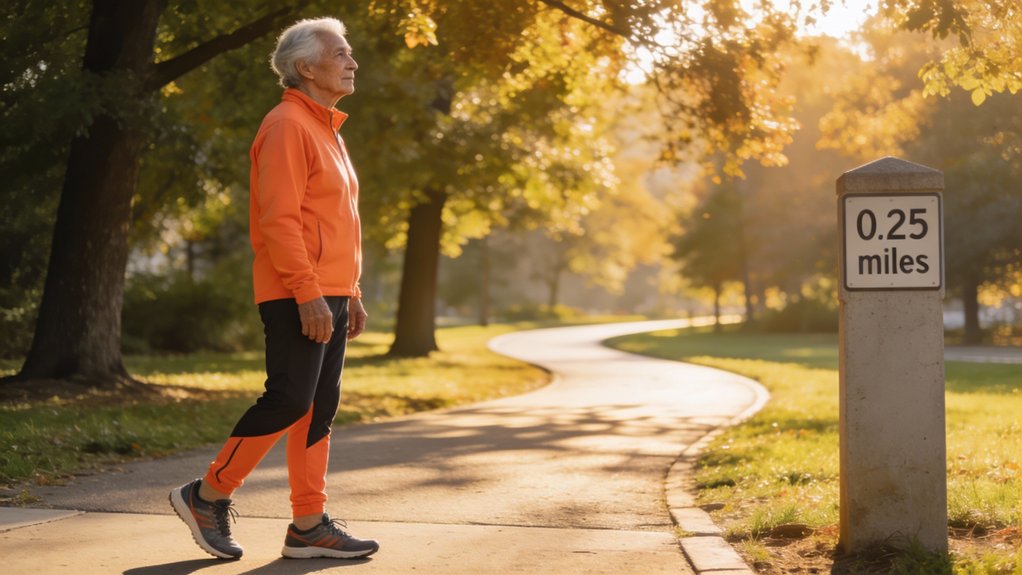
When you’re starting a walking routine as a senior, keep it simple: begin with just 5 to 10 minutes of walking. This approach prevents overexertion and lets your body adjust comfortably.
Your initial goals shouldn’t push you too hard. Short distances build confidence and establish a sustainable habit. You’re setting yourself up for success by starting conservatively.
As your fitness improves, you’ll notice walking benefits like increased energy and better endurance. Keep expectations realistic.
Your body will tell you what it needs. This foundation matters more than ambitious plans that lead to burnout or injury. Starting with small walking goals is particularly important if you have arthritis or joint concerns, as it allows you to manage pain while building strength gradually.
Correct Your Walking Posture and Form
As your walking routine becomes established, proper posture and form deserve your attention. Keep your head up and shoulders relaxed while maintaining a straight back: this alignment protects your spine and reduces strain.
Engage your core muscles to support your lower back and prevent falls.
Strengthen your core muscles to support your lower back and maintain balance during your walks.
Step heel-first, rolling through to your toes with light ground contact. This technique minimizes impact on your joints.
Bend your arms at roughly ninety degrees and swing them naturally. These posture tips enhance walking benefits considerably.
Breathe deeply through your nose and exhale through your mouth to improve oxygen flow and stamina throughout your walks.
For additional stability while maintaining proper form, consider using a walking cane if you experience balance concerns or have a history of falls.
Choose Safe, Well-Lit Walking Routes
Safety matters just as much as your walking form, so don’t overlook where you choose to walk. Your route selection directly impacts your security and comfort.
Pick well-lit paths, especially during dawn or dusk hours when visibility drops. Neighborhood safety improves when you select even surfaces and minimal traffic areas.
Designated walking trails and parks offer pedestrian-friendly environments specifically designed for walkers like you. Always choose paths with good lighting to spot potential hazards ahead.
Before heading out, tell someone your route and expected return time. This simple step protects you when exploring unfamiliar neighborhoods.
Stick to established routes you trust.
Choose Walking Shoes That Support Your Feet
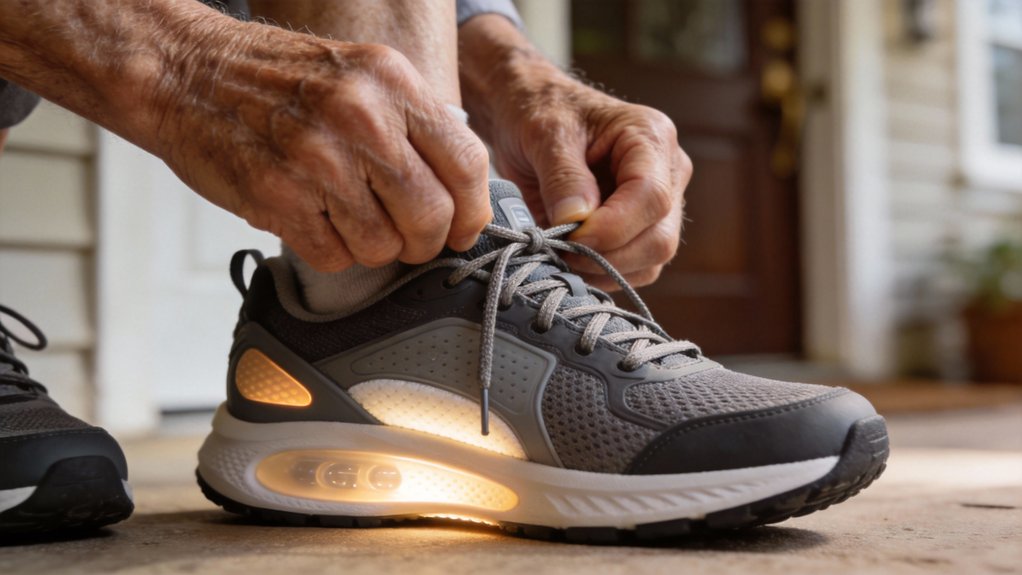
Your shoes are the foundation of a comfortable walking routine. Start by measuring both feet, since they can differ and change over time.
Look for breathable shoe materials that keep your feet cool and dry during walks. A snug, not tight, fit guarantees proper support without discomfort.
Prioritize cushioning options like memory foam or gel insoles to absorb impact and protect your joints. Adequate arch support is essential for stability and prevents foot fatigue during longer distances.
You’ll serve your body well by investing time in finding shoes that truly support your feet and match your walking goals.
Use Mobility Aids if You Need Them
Once you’ve got the right shoes locked in, it’s worth considering whether a mobility aid might help you walk with more confidence.
Finding the right shoes sets the foundation—then consider if a mobility aid could boost your walking confidence.
These tools aren’t signs of weakness, they’re practical support systems that reduce joint strain and enhance balance.
Consider these mobility aid types:
- Canes for light support and stability
- Walkers for increased balance assistance
- Trekking poles for upper body engagement
- Rolling walkers for comfortable rest stops
- Forearm crutches for stronger support
Proper adjustment matters considerably.
Have your healthcare provider help you set the correct height.
The right fit transforms your walking experience, making exercise safer and more enjoyable while building your confidence gradually.
Increase Duration and Pace Gradually
Building your walking routine takes patience and strategy. Start with 10 to 15 minutes at a comfortable pace, then add five minutes weekly as your endurance improves.
Your goal is 150 minutes per week, which you can split into shorter sessions throughout your days.
Gradually increase your walking pace over time. You’ll know you’ve hit moderate intensity when you can maintain a conversation but can’t sing.
Use fitness tracking tools like apps or pedometers to monitor your walking goals and distance.
Once you’re comfortable, incorporate one to two minutes of brisk walking, then return to your slower pace.
This interval approach strengthens your cardiovascular system effectively.
Warm Up, Cool Down, and Listen to Your Body

Warm Up, Cool Down, and Listen to Your Body
As you build up your walking routine, warming up and cooling down become just as important as the walk itself. Proper stretching techniques and body awareness help you exercise safely while serving your long-term health goals.
Before each session:
- Perform arm circles and leg swings for 5 minutes
- Gently stretch major muscle groups
- Start walking at an easy pace
- Monitor how your body feels throughout
After walking, slow your pace for at least 5 minutes. Follow this with stretches to reduce tension and improve flexibility.
Pay attention to sharp pain, dizziness, or unusual breathlessness: these signal you need rest. Adjust intensity based on your energy levels daily.
Rest days matter too; they prevent overexertion and injury.