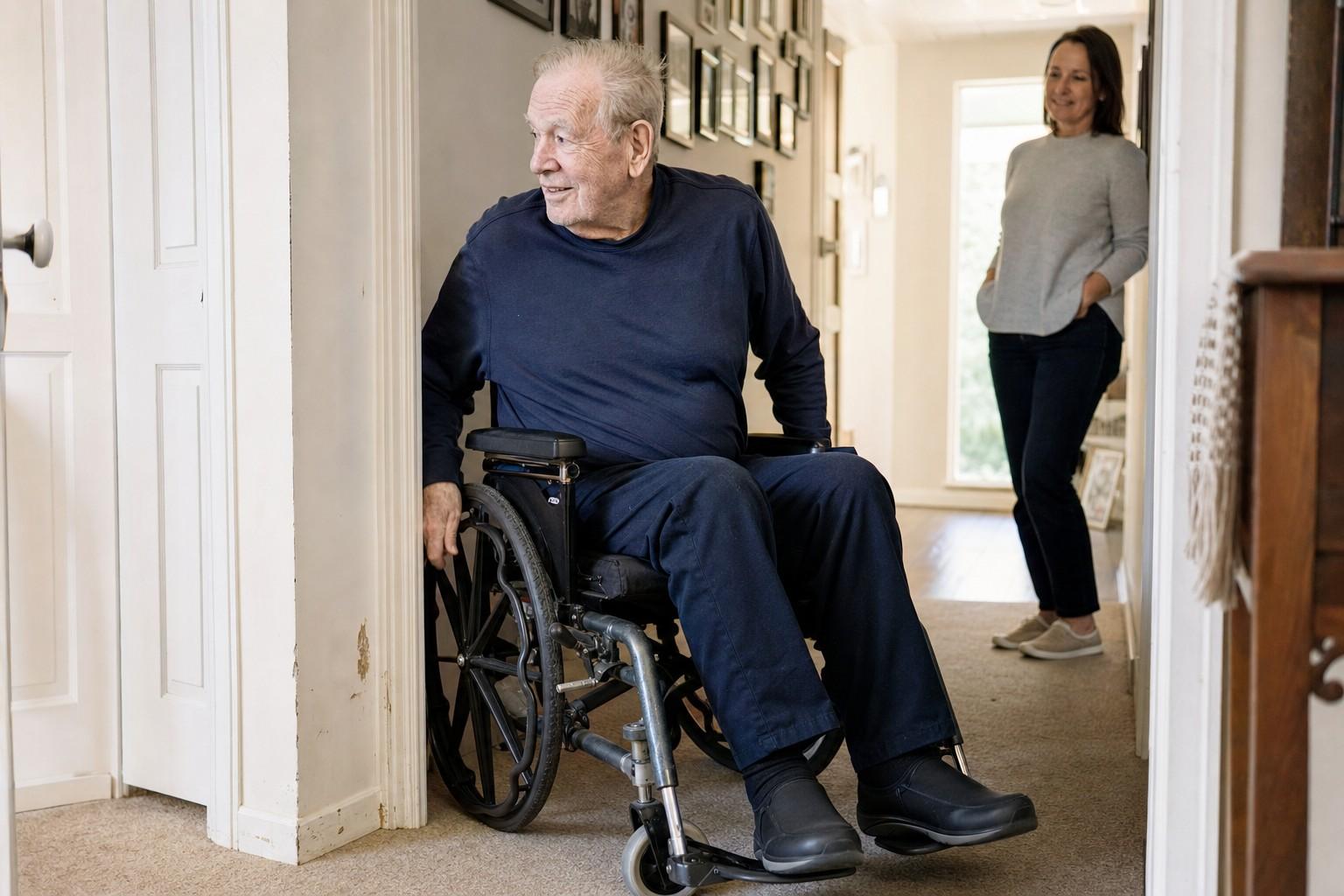
Best Wall Protectors for Wheelchair Users
A wheelchair footrest catches the same wall corner a hundred times before anyone notices the paint is gone. The fix for most homes is a self-adhesive corner guard, and it takes about ten minutes to put on.
This page covers four products worth buying, based on where the damage actually happens: corners, flat hallway runs, and door edges.
Reader-supported: if you buy through links on this page we may earn a small commission, at no extra cost to you.
Our picks at a glance
- Wall Protex SS434 Self-Adhesive Corner Guard. Best for chipped wall corners.
- Clear Wall Protector Film Sheets. Best for door and hallway impact zones.
- Clear PC L-Shaped Door Edge Guards. Best for doorway edges and jambs.
- Wheelchair Footrest Cover. Cheapest first move, since it pads the chair instead of the wall.
The best wall protectors for wheelchair users
Wall Protex SS434 Self-Adhesive Corner Guard
Best for: chipped wall corners.
Outside corners take the worst of it. A footrest or armrest clips the same point over and over, and the paint chips down to drywall within a few months.
This clear guard presses onto the corner with adhesive backing, no drilling or screws needed. It is close to invisible against a light wall, so it does not fight your decor.
The limitation is scope. It protects one corner point, not a long stretch of hallway wall, so a house with several damage-prone corners needs one guard per corner.
Ten minutes of work, and that corner stops chipping.

Clear Wall Protector Film Sheets
Best for: door and hallway impact zones.
Flat wall sections along a hallway take a different kind of damage than corners. Repeated light scuffs from a footrest or wheel dull the paint over a wider area.
These transparent adhesive sheets are cut to size, so you can cover a stretch of wall next to a doorway or along a tight turn. Seven sheets per pack is enough for several spots in most homes.
The honest limitation is depth. The film handles surface scuffs well, but it will not stop a hard, direct hit the way a rigid guard does.
For everyday scuffing, though, film is exactly enough.

Clear PC L-Shaped Door Edge Guards
Best for: doorway edges and jambs.
Doorways get hit from two directions: the wheelchair passing through, and the door itself swinging into range. The edge and jamb usually show it first.
These rigid L-shaped guards wrap around a door edge, at 11.8 inches per side, and the clear polycarbonate blends into most trim. The eight-pack covers several doorways in one order.
If your home has narrow openings, it is worth checking clearance before you shop further. Our guide on how wide a wheelchair actually is walks through measuring doors correctly.
The tradeoff is that these guards suit edges and corners, not a flat wall panel. For a wide impact zone, pair them with the film sheets above rather than relying on edge guards alone.

Wheelchair Footrest Cover
Cheapest first move: pad the chair, not just the wall.
Every wall protector on this page treats the damage after it happens. This one addresses the source. A non-slip cover slips over the footplate, softening the part that usually strikes first.
It will not stop a wall from ever getting scuffed, since armrests and push handles can still make contact. But it costs less than any wall guard here, and it is worth adding even if you also buy corner or door protection.
Less force at the source means less damage everywhere.

How to choose the right wall protector
Match the product to where the damage actually happens, not to what looks impressive online.
- Corner damage. A single self-adhesive corner guard fixes a chipped outside corner in minutes.
- Flat wall runs. Cut-to-size film sheets cover a wider stretch of hallway or a spot beside a doorway.
- Door edges and jambs. Rigid L-shaped guards handle the harder, repeated contact a door edge takes.
- The wheelchair itself. A footrest cover reduces the force of every knock before it reaches the wall.
- Installation. Adhesive-only products go on fastest and lift off cleanly if you rent. Screw-mounted guards hold up longer under heavy daily use but leave holes.
Most homes end up using two of these together, a corner or edge guard plus a footrest cover, rather than one product alone.
Fix the spot that gets hit, not the whole wall.
When you do not need to buy anything
Light scuffing on one or two spots often does not need a purchase at all. A footrest cover plus a few felt pads on armrests can quiet down minor contact for very little money.
Try the cheap route first.
Bigger jobs are a different story. A long hallway that needs full wall panels, or a house that wants commercial-grade bump rails, is better handled by a specialty supplier. Those installations are usually custom-cut and screwed into studs, which is beyond what a self-adhesive product is built for.
Our guide on how to protect walls from wheelchair damage covers the full range of fixes. It includes paint options and panel systems for bigger jobs.
Frequently asked questions
Will adhesive corner guards damage the paint underneath?
Most are designed to remove cleanly if the paint is in reasonable condition. Peeling old paint can lift with the guard, so test a small area first if you are unsure.
Can renters use these without violating a lease?
Adhesive film sheets and corner guards are generally considered a safe bet for renters, since they remove without drilling. Check your lease terms if you are not certain, and avoid screw-mounted guards in a rental.
Do I need both a corner guard and a footrest cover?
Many households do. The footrest cover reduces how hard the chair hits in the first place, and the corner guard protects the spot that still takes contact.
Bottom line
Start with the Wall Protex SS434 corner guard if chipped corners are your main problem. It is the fastest fix for the most common damage pattern.
Add the film sheets for wider hallway runs, and the door edge guards for doorways that take repeated contact. Shopping for a new chair too? Our guide to the best travel wheelchairs covers models that turn tighter and clip walls less.
The footrest cover is worth adding regardless of which wall product you choose. It is the cheapest item here, and it cuts down on the damage before it ever reaches the wall.