How To Stop Using Walker? (Tips for Transitioning Away from a Walker)
When you’ve been injured and need a walker during rehabilitation, you might be looking to regain your vitality and get to a point where you don’t need it anymore.
Mount Sinai Hospital reports most patients transition away from their walker within 2-4 weeks after hip replacement, though timelines vary based on your injury type, age, and overall health.
What This Guide Covers:
- Self-assessment factors to discuss with your healthcare provider
- Research-backed exercises physical therapists commonly prescribe
- Step-by-step transition strategies
- Overcoming fear and building confidence
- What to do when setbacks happen
Different injuries require different timelines. Hip replacements typically take 2-4 weeks, ankle fractures 4-6 weeks, and stroke recovery may take several months. For hip replacement specific guidance, see our detailed guide on walker timelines after hip surgery.
1. Is It Time to Reduce Walker Use? Questions for Your Healthcare Provider
Only your doctor or physical therapist can determine when it’s safe to transition away from your walker. These are factors they evaluate, not a self-diagnostic tool.
Physical Readiness Factors
Balance Assessment:
- Can you stand 30 seconds without support?
- Can you stand on one leg for 5-10 seconds?
Pain Levels:
- Is pain below 3 out of 10 during walking?
- Does movement cause significant discomfort?
Strength Markers:
- Can you rise from a chair without using your hands?
- Can you put weight evenly on both legs?
Stability Check:
- Can you walk in a straight line without veering?
- Do you feel secure without leaning heavily on the walker?
What Your Physical Therapist Will Evaluate
Healthcare providers use standardized tests to assess readiness:
- Timed Up and Go Test: Measures mobility and fall risk
- 30-Second Sit-to-Stand Test: Evaluates leg strength
- Four-Stage Balance Test: Assesses balance progression
- Gait analysis: Examines walking speed and stability
Important: These are factors your healthcare team considers. Never make changes to your mobility aids without consulting your doctor or physical therapist.
2. Overcoming Fear and Building Confidence
Research shows 30-50% of seniors experience fear of falling that delays walker transition even when they’re physically ready.
Why Fear Develops
Your walker becomes a security blanket during recovery. Previous falls create anxiety. Confidence decreases during the rehabilitation period, making it harder to let go even when your body is capable.
Research-Backed Strategies
Gradual Exposure Method:
Start in carpeted rooms where falls are less likely to cause injury. Progress to hardwood floors with furniture nearby for support. Finally, attempt short outdoor distances in familiar areas.
Social Support:
Practice when a family member is home. Ask your physical therapist if your caregiver can attend a session. Having someone present reduces anxiety and provides backup if you feel unsteady.
Environmental Setup:
Begin in well-lit, familiar spaces. Remove tripping hazards before attempting independent walking. Keep a sturdy chair nearby in case you need to sit down suddenly.
According to rehabilitation research, patients who address psychological readiness alongside physical training have better adherence to transition protocols.
3. Physical Therapist-Recommended Exercises
⚠️ Your PT will customize these exercises for your needs. Never start new exercises without professional guidance.
These exercises are commonly prescribed by physical therapists for walker transition.
Exercise 1: Sit-to-Stand
Starting Level: 5 reps, twice daily, hands on armrests allowed
Progression: 10 reps, twice daily, no hands needed
What It Strengthens: Quadriceps and core muscles for daily activities like using the toilet and getting in and out of bed
How to perform: Sit at the front of a sturdy chair with feet flat on floor. Lean forward slightly, chest over toes. Stand up without rocking. Slowly sit back down.
Exercise 2: March in Place (at walker)
Starting Level: 10 steps per leg
Progression: 20 steps per leg, lifting knees higher
What It Strengthens: Hip flexors and balance
How to perform: Stand at your walker with brakes engaged. Lift one knee as high as comfortable. Lower it slowly. Alternate legs in a marching motion.
Exercise 3: Side Leg Lifts
Starting Level: 10 lifts each leg, slow controlled motion
Progression: Add ankle weights when approved by PT
What It Strengthens: Hip stabilizers for lateral balance
How to perform: Stand at your walker. Lift one leg out to the side, keeping your body straight. Hold for 2 seconds. Lower slowly. Repeat on other side.
Exercise 4: Balance Stance
Week 1 Goal: Stand 10 seconds without support
Week 4 Goal: Stand 30 seconds without support
What It Tests: Readiness for progression to next phase
How to perform: Stand near a counter or wall for safety. Release your hands and hold steady. Work up from 10 seconds to 30 seconds over several weeks.
Progression Guidelines
✓ Advance when: Exercise feels easy for 3 consecutive days
✓ Stay at current level when: You experience pain or instability
✓ Report to your PT: Any changes in pain, balance, or confidence
Source: Johns Hopkins Medicine Balance Exercise Protocol
4. The Step-by-Step Transition Method
Physical therapists commonly recommend the progressive distance approach. Your timeline may differ based on your PT’s assessment.
Phase 1: Furniture Support Method (Week 1-2)
Goal: Walk short distances without walker using furniture
How to practice:
- Take 5-10 steps holding kitchen counter or sturdy furniture
- Return to walker for all other movement
- Practice 3 times daily in familiar rooms
Ready for Phase 2 when: You can walk across one room (30-50 feet) using only occasional furniture support
Phase 2: Walker Nearby (Week 3-4)
Goal: Walk room-to-room without walker
How to practice:
- Leave walker in adjacent room, not with you
- Walk familiar routes: bedroom to bathroom to kitchen
- If you feel unsteady, return to walker immediately
- No rushing, take your time
Ready for Phase 3 when: You can complete your morning routine without needing the walker
Phase 3: Consider Cane Transition (Week 4-6)
Goal: Build confidence before full independence
Why this step matters: Many physical therapists recommend using a cane before going completely independent. It provides security while you build confidence.
Cane guidelines:
- Hold cane in hand opposite your weaker leg
- Step with weak leg, then cane, then strong leg
- Use for 1-2 weeks before attempting full independence
Your physical therapist will determine if this phase is appropriate for your recovery.
5. Tracking Your Progress
Weekly Self-Check (Discuss Results With Your PT)
Balance Milestones:
- [ ] Week 1: Stand 10 seconds without support
- [ ] Week 2: Stand 30 seconds without support
- [ ] Week 4: Stand on one leg 5 seconds
- [ ] Week 6: Stand on one leg 10 seconds
Distance Milestones:
- [ ] 10 steps without walker
- [ ] Across one room (30-50 feet)
- [ ] Multiple rooms (100+ feet)
- [ ] Outside to mailbox
Comfort and Safety:
- Pain level: _/10 (should stay below 3)
- Confidence: _/10 (should improve each week)
- Falls or near-falls this week: _
Warning Signs to Report Immediately
⚠️ Pain increasing instead of decreasing
⚠️ New swelling in surgical or injury area
⚠️ Multiple near-falls in one week
⚠️ Increased fear rather than growing confidence
6. What If Things Don’t Go As Planned?
Research shows setbacks are normal during walker transition. Here’s how to handle them.
Problem: “I feel physically ready but too scared”
What this means: Fear-based hesitation affects 30-50% of patients recovering from injuries.
What to do: Ask your PT about fear-of-falling intervention programs. Request practice sessions with a caregiver present. Try gradual exposure in controlled environments like your home.
Problem: “Pain increased when I reduced walker use”
What this means: You may have progressed too quickly. Pain increase is your body’s signal to slow down.
What to do: Return to previous support level immediately. Discuss the pain increase with your PT. They may adjust your exercise program or timeline.
Problem: “I’m exhausted after walking without my walker”
What this means: Your muscles are working differently without the walker. Fatigue is normal initially.
What to do: Take shorter, more frequent walks rather than long distances. Rest between practice sessions. Gradually build endurance over days and weeks.
If you experience multiple setbacks, schedule an extra PT session rather than pushing through. Slow progress is better than injury.
7. Staying Strong After You Stop Using Your Walker
The Otago Exercise Program research shows strength gains disappear in 2-3 weeks without maintenance. Fall risk returns to baseline within 6 months if exercises stop.
Months 1-3: Continue Your Routine
Keep doing the same exercises from your transition phase. Maintain 3 times weekly minimum. Focus on preserving the strength you’ve built.
Months 4-6: Active Lifestyle
Walk 30 minutes, 3 times weekly. Continue balance exercises 2 times weekly. Add enjoyable activities like gardening or tai chi.
6-Month Check-In
- [ ] Can you still perform all foundation exercises?
- [ ] Is your balance as good as month 1 post-transition?
- [ ] Have you avoided falls for the past 3 months?
If you answered “no” to any question, consult your PT for a refresher session.
8. Frequently Asked Questions
Q: How long does it take to stop using a walker?
A: Timelines vary significantly. Mount Sinai Hospital reports most hip replacement patients no longer need a walker after 2-4 weeks. Other injuries may take 4-8 weeks or longer. Only your healthcare provider can determine your specific timeline based on your recovery progress.
Q: Can I stop using my walker immediately if I feel ready?
A: Healthcare providers typically recommend gradual transitions rather than sudden changes. Abrupt discontinuation may increase fall risk. Follow your physical therapist’s progressive protocol for the safest results.
Q: What if I still feel unsafe without my walker?
A: This is important feedback for your physical therapist. You may benefit from additional therapy sessions, a transitional device like a cane, or fear-of-falling interventions. Never push through feeling unsafe.
Q: How do I know if I’m progressing too quickly?
A: Warning signs include increased pain, swelling, multiple near-falls, or decreased confidence. If you experience any of these, return to your previous support level and consult your PT before advancing again.
Summary: Your Path to Independent Mobility
Transitioning away from a walker combines physical preparation, psychological readiness, and professional guidance. While research shows typical timelines of 2-4 weeks for some injuries, your journey is unique.
Key Takeaways:
- Only your healthcare provider determines transition readiness
- Progressive exercises build strength safely over weeks
- Psychological confidence is as important as physical ability
- Setbacks are normal, slow progress beats injury
- Long-term maintenance prevents strength loss and fall risk
Next Steps:
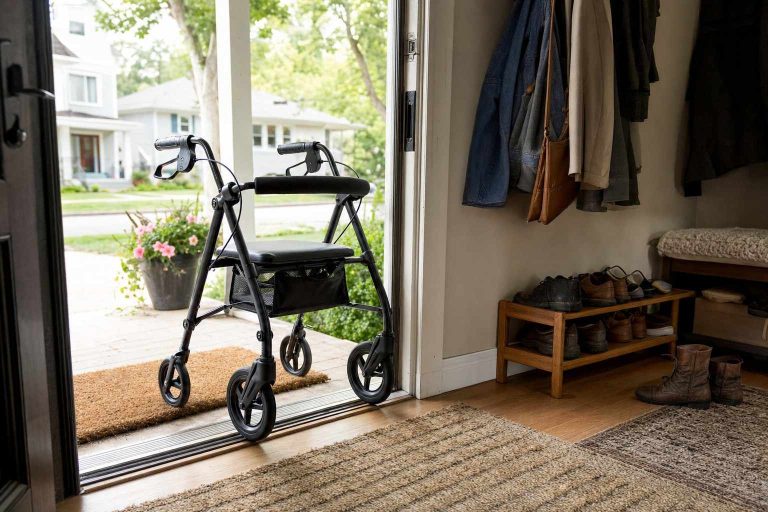
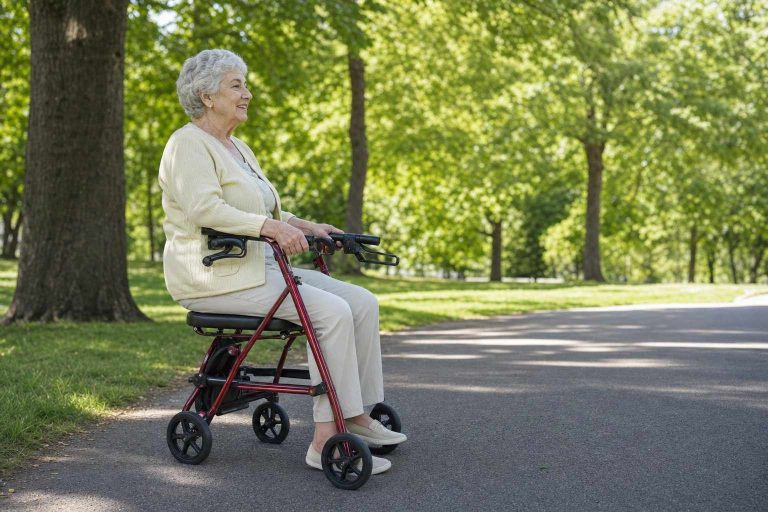
Read our related guide: How Long Do You Use A Walker After Hip Replacement? And if longer outings still call for support, our guide to rollators with a seat covers models you can rest on.
Remember: The goal isn’t speed. It’s safe, sustainable independence.
Medical Disclaimer: This article provides general educational information based on clinical research and medical guidelines. It is not medical advice. The decision to reduce or stop using a walker must be made by your doctor or physical therapist based on your individual health status and recovery progress. Never make changes to your mobility aids without consulting your healthcare provider.