Walking When You Need to Sit Down Often
Plenty of older adults can cover a real distance over the course of a day. Almost none of them do it in one unbroken stretch.
The limiting factor is rarely the legs. It is whether there is somewhere to sit along the way.
That is true whether the cause is a heart or lung condition, arthritis, recovery from surgery, or simply less stamina than a few years back. Needing to stop partway through a walk is common.
It doesn’t mean the walk failed.
This guide treats frequent rest stops as something to plan around, not a problem to hide from. It covers picking a route with seating built in, building distance in stages, and carrying your own seat when benches cannot be counted on.
Resting is a strategy, not a setback
A walk broken into three short pieces still gets the same time on your feet as one longer walk. Treat the stops as part of the plan, not a sign of falling short.
The National Institute on Aging frames endurance activity as something to build up to gradually, rather than a pace to hit on day one. That gradual approach fits naturally with frequent rest stops built in.
Every stage completed, even a short one, adds up over the day and over the week.
Even broken into pieces, a walk still delivers the walking benefits for seniors. That holds whether it happens in one stretch or in three shorter ones with a rest in between.
Plan your route around places to sit
Most walking advice assumes the walker sets the pace and the route follows. For someone who needs to stop often, the route matters more than the pace.
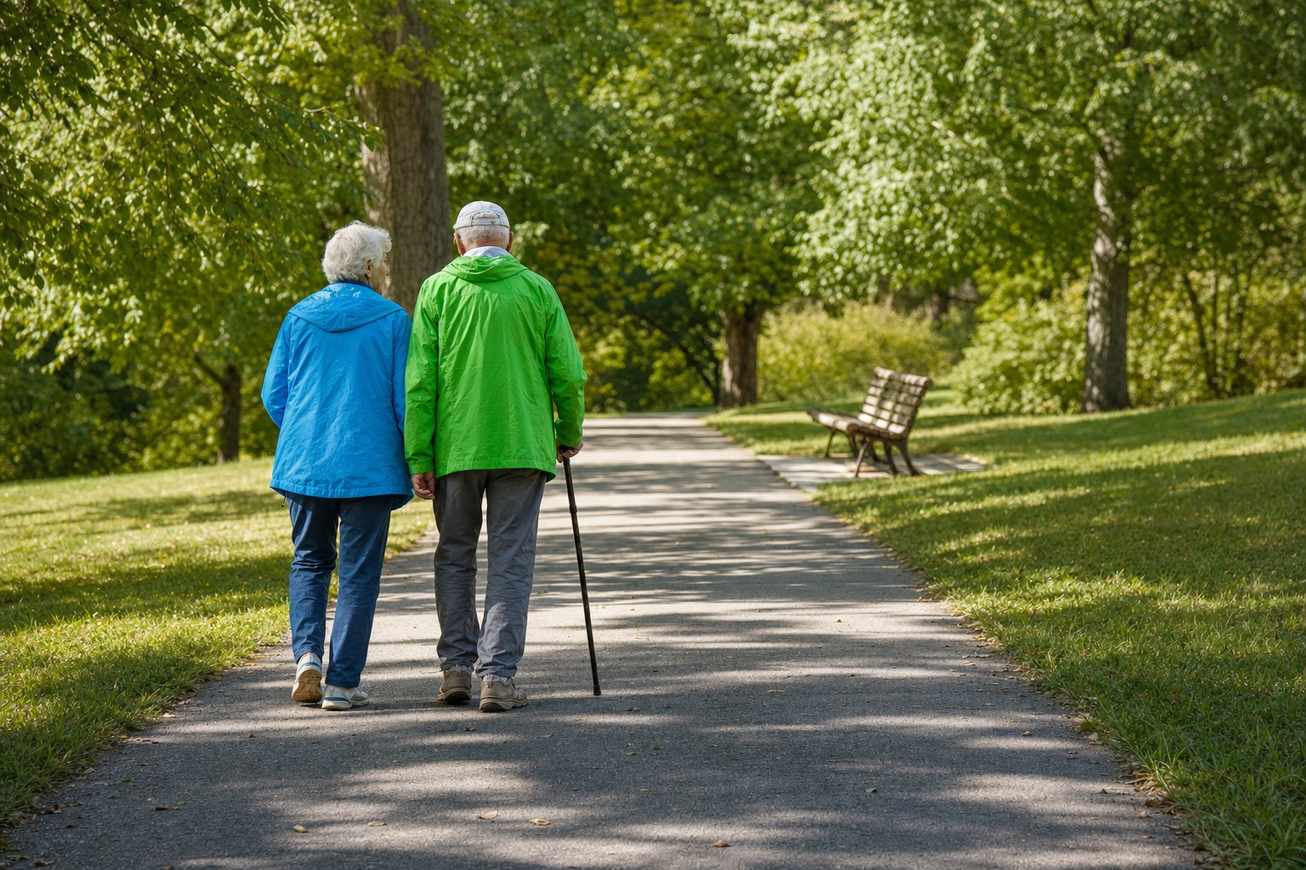
Before heading out, think through where the seating actually is. A bus stop bench, library steps, a shaded wall outside a shop, a neighbor’s low garden wall.
A route with a resting point every few minutes beats a route with the nicest scenery.
A short list to work from:
- Start with a loop near home, so a resting point is never far away.
- Note benches, low walls, and shop entrances on routes used often.
- Time the walk for when shops or libraries are open, if resting indoors is part of the plan.
- Tell someone the route and roughly when to expect you back.
None of this needs an app.
A route walked two or three times gets memorized quickly, seating included.
Build the distance in stages
Treat a longer walk as several short ones connected by rest, not one continuous effort. Walk to the first resting point, sit, then decide whether to continue.
This staged approach lines up with that same gradual philosophy: build up over time, not all at once.
A short walk that ends at the first bench is still progress toward a longer one next month.
Each stage can be modest.
Walking to the end of the block, resting, then walking back home is a complete session, not a failed attempt at something longer.
The same gradual logic applies to anyone starting a walking routine from scratch. Begin short, and let the distance grow on its own schedule rather than a fixed one.
Balance and strength work help too
Walking covers one piece of staying steady on your feet. It’s not the whole picture.
The National Institute on Aging groups exercise into three types: aerobic activity like walking, muscle-strengthening exercise, and balance work. All three support each other.
Balance exercises are linked specifically to fewer falls, not just steadier steps.
Simple moves count, like standing on one foot near a sturdy chair or practicing standing up from a seated position. None of it needs a gym.
The National Institute on Aging also notes that muscle-strengthening exercise makes everyday moves like getting up from a chair easier.
The same motion is behind standing up from a bench, or a seat cane.
Getting up from a rest stop, again and again over a walk, is itself a small strength exercise.
None of this replaces a walk built around rest stops. It works alongside it.
Carry your own seat with a cane or a rollator
Planning a route around benches works only if the benches are actually there. The other option is bringing a seat along instead of hoping to find one.
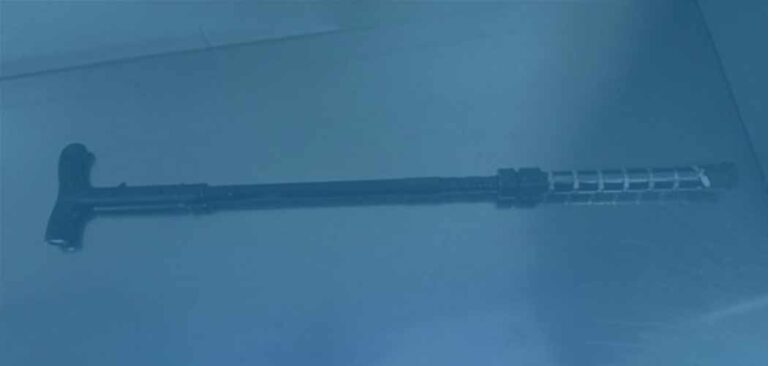
For someone who still walks well most of the time, a walking cane with a built-in seat is the simplest upgrade. Fold it open at the first sign of tired legs, and there is a place to sit that does not depend on finding a bench.
A seat cane is light enough to carry all day, but the seat itself is small, closer to a perch than a chair.
The same idea scales up for someone who already leans on more support. For that reason, a rollator with a seat gives a wider, sturdier, more comfortable place to rest than a folding cane seat can.
The trade-off is size. A rollator is heavier and more awkward to lift in and out of a car than a folding seat cane.
Neither is the wrong choice.
A seat cane suits someone still walking well who wants backup for occasional stops. A rollator suits someone who expects to lean on support and rest often, not occasionally.
Whichever one looks like a fit, remember a seat cane is a cane first. It only helps if it is cut to the right length, so it is worth checking how long a cane should be before buying one.
When to mention it to a doctor
Getting tired on a walk is normal, especially on a new route. Needing to stop for a specific reason is worth paying attention to.
Breathlessness, chest tightness, or a cramping pain in the legs that forces a stop is a different problem from ordinary tiredness.
Ordinary tiredness eases with a short rest and does not get worse as the walk goes on. Pain or breathlessness that shows up at the same point every time is worth raising with a doctor, not just planning a route around.
This is general information, not a diagnosis.
A doctor or physical therapist can tell the difference between a fitness limit and something that needs treatment.
Bottom line
Needing to sit down partway through a walk is not a failure. It is information about how to structure the walk.
Plan the route around seating, build the distance in stages, and carry a seat cane or a rollator if benches cannot be counted on.
The goal isn’t walking without stopping. It’s staying out walking, on terms that fit the body doing it today.