5 Best Wheelchair Ramps for 2026
A wheelchair ramp is only safe when it is long enough for the height you need to clear. Too short means too steep, and too steep is dangerous.
Start with the calculator below to find the right length for your rise. Then pick the ramp that matches your weight and portability needs. Here are five solid options for 2026, from a full 12-foot ramp down to a 2-foot threshold model.
Reader-supported: if you buy through links on this page we may earn a small commission, at no extra cost to you.
Ramp length calculator
Enter the total rise (the vertical height you need to climb) to see the ramp length you need.
The 1:12 slope is the ADA standard: 1 inch of rise needs 1 foot of ramp. It is the safest choice for using a ramp on your own. Steeper slopes need a helper. Always round up to the next ramp size sold.
Our top wheelchair ramp picks
- Best for porches and several steps: Aluminum Ramp, 12 ft, 600 lbs
- Best portable full-length: Portable Aluminum Ramp, 10 ft, 600 lbs
- Best heavy-duty: 6 ft Portable Ramp, 800 lbs
- Best for doorways and thresholds: Adjustable Threshold Ramp
- Best for a single step: 2 ft Portable Ramp with Quick-Lock
The 5 best wheelchair ramps reviewed
1. Aluminum Wheelchair Ramp, 12 ft, 600 lbs
Best for: porches and several steps.
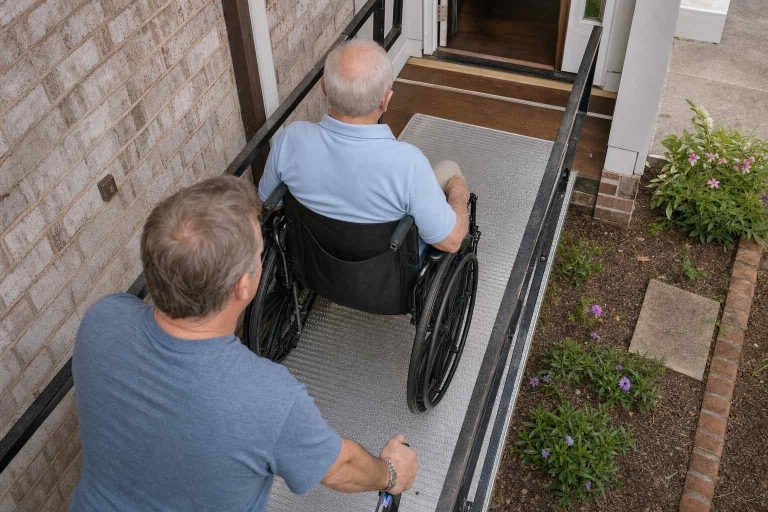
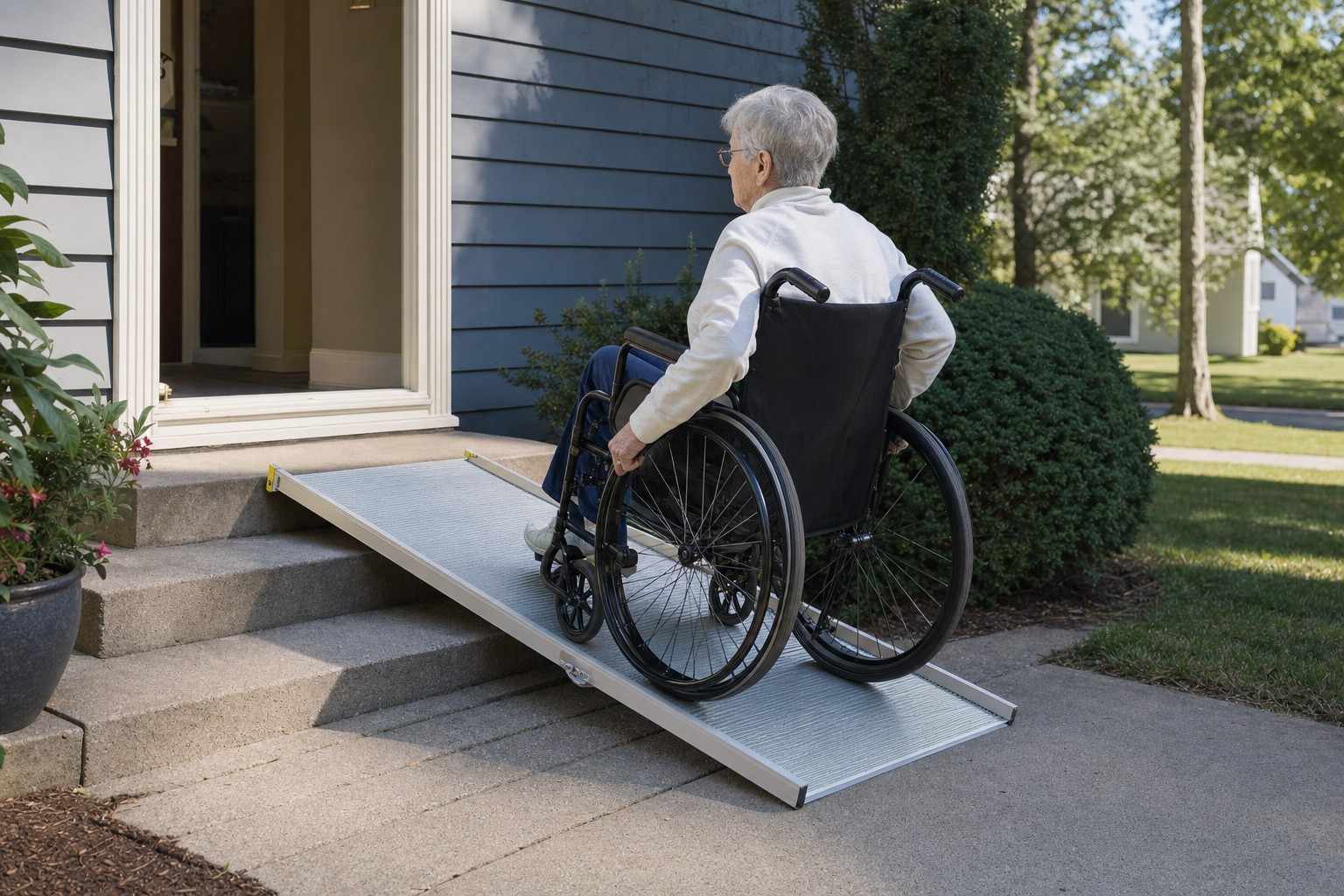
A 12-foot ramp gives you the length to clear a porch or a few steps at the safe 1:12 slope. Rated to 600 pounds, it carries most wheelchairs, power chairs, and scooters with the user aboard. Aluminum keeps it from rusting, and a folding design makes a ramp this long easier to move and store. Choose this when you have real height to overcome and want to keep the grade gentle.
2. Portable Aluminum Wheelchair Ramp, 10 ft, 600 lbs
Best for: a full-length ramp you still need to move.
The 10-foot version covers most steps and shorter porches while folding down for transport. At 600 pounds it handles everyday wheelchair and scooter use. If you need to load the ramp into a van or move it between entrances, the shorter length helps. It is easier to carry than a 12-footer, with only a little less reach.
3. 6 ft Portable Wheelchair Ramp, 800 lbs Heavy-Duty
Best for: heavier power chairs and scooters.
Shorter but stronger, this 6-foot ramp is rated to 800 pounds. That makes it the pick when load capacity matters most, such as a heavy power chair or a mobility scooter with the rider aboard. Six feet suits a single step or a low porch at a safe grade, and the higher rating gives you a comfortable safety margin.
4. Aluminum Adjustable Threshold Ramp
Best for: doorways, sliding doors, and raised floor transitions.
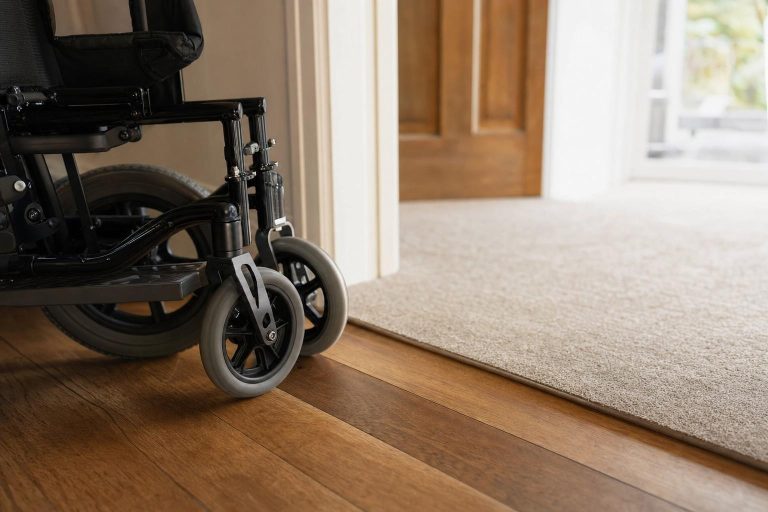
A threshold ramp solves the small but stubborn lip at a doorway, a sliding glass door, or a raised floor transition. The adjustable height lets you match it to your exact threshold, so the chair rolls over smoothly instead of catching. It is the right tool for an inch or two of rise, where a long ramp would be overkill.
5. 2 ft Portable Wheelchair Ramp with Quick-Lock
Best for: a single step or a curb.
For one step or a curb, a 2-foot ramp is light, grab-and-go, and stores almost anywhere. The quick-lock design sets up fast with no tools. Keep one in the car for the curbs and single steps you meet when you are out. It also works at home for a back door or a garage lip.
How to choose a wheelchair ramp
- Length and slope. This is the big one. Use the calculator above and aim for the 1:12 grade. When in doubt, go longer.
- Weight capacity. Add the chair, the rider, and anything carried, then leave a margin. A power chair plus rider can top 400 pounds.
- Type. A threshold ramp suits a doorway lip. A folding or telescoping ramp suits steps and porches. A permanent ramp suits daily long-term use.
- Surface grip. Look for an anti-slip surface and reflective or high-contrast edges for safety in rain and low light.
- Portability. Aluminum is the standard: strong and rust-proof. A folding ramp with a handle is far easier to move and store.
Frequently asked questions
What length ramp do I need for 2 steps?
Two standard steps are about 14 inches of total rise. At the safe 1:12 slope that calls for a ramp around 14 feet. Measure your exact rise and use the calculator above, since step heights vary.
What slope is safe for a wheelchair ramp?
The ADA standard is 1:12, meaning 1 foot of ramp for every inch of rise. That is the safest grade for someone rolling up on their own. Steeper grades like 2:12 should only be used with a helper.
Do I need a permit for a wheelchair ramp?
A portable ramp usually needs no permit. A permanent, built-in ramp often does, especially if it attaches to the house. Check with your local building office before a permanent install.
The bottom line
Measure your total rise first, then use the calculator to find the safe length. Once you know the size, pick the ramp that fits your weight and portability needs. A threshold ramp handles a doorway lip, while a longer folding ramp tackles steps and porches. If you are also tight on space indoors, check whether your chair clears the frame in our wheelchair doorway width guide. And see the full range of wheelchair types if you are still choosing a chair.