How to Modify CrossFit Movements for Older Adults
The burpee becomes a step back and a stand up tall. That single change keeps the full-body reset and drops the jump and the floor slam that make the original risky for older joints.
Every movement built for young, healthy joints has an older-adult version that keeps the benefit and removes the risk. That holds whether the original comes from a barbell, a pull-up bar, or the floor.
Modifications for standard functional movements, the kind associated with CrossFit and similar strength programs, are not a lesser version. They fit a 60, 70, or 80 year old body just as well as they fit a 30 year old one. They also fit into a broader plan for functional fitness for older adults, and none of it needs a gym membership or a coach.
Why scale the movement instead of skipping it
Skipping strength work altogether is the bigger risk. The CDC recommends that adults 65 and older do muscle-strengthening activity on at least two days a week, along with balance activities.
A scaled squat or a scaled push-up still counts toward that goal. The muscles doing the work are largely the same. What changes is the range, the load, and the speed, not the benefit.
Some movements carry more risk than payoff at any age. For that, exercises seniors should avoid is a good place to check before adding anything new.
Most standard movements, though, just need translating, not avoiding.
Lower-body movements
These three cover the everyday basics: standing up, bending down, and stepping up.
The squat becomes a sit-to-stand
A standard back squat loads a bar and asks for depth and speed.
The modified version: a sit-to-stand from a stable chair, controlling the way down as much as the push back up. Slow the descent, and the chair is there if the legs give out partway.
That control does most of the work a squat is meant to build.
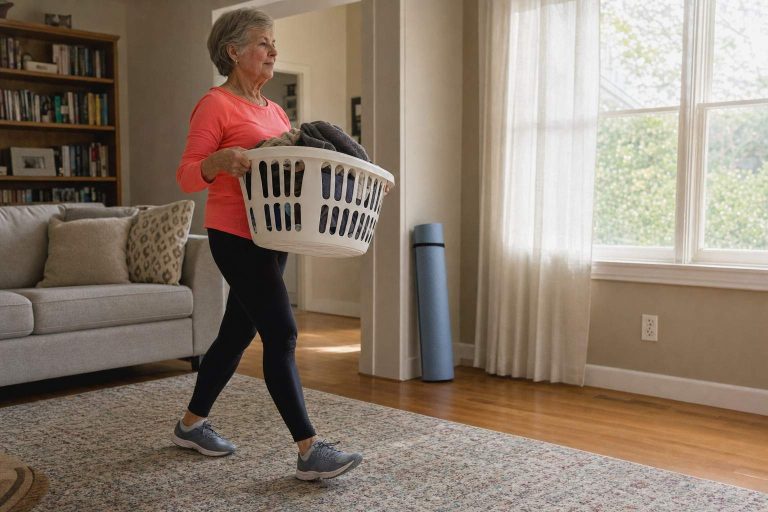
The deadlift becomes a hip hinge
A conventional deadlift lifts a loaded bar off the floor.
The modified version: a hip hinge to a raised object, like a laundry basket set on a chair seat. Raising the object shortens the range and keeps the spine in a safer position throughout.
The hinge pattern, not the floor-to-lockout range, is what protects the back during everyday lifting and carrying.
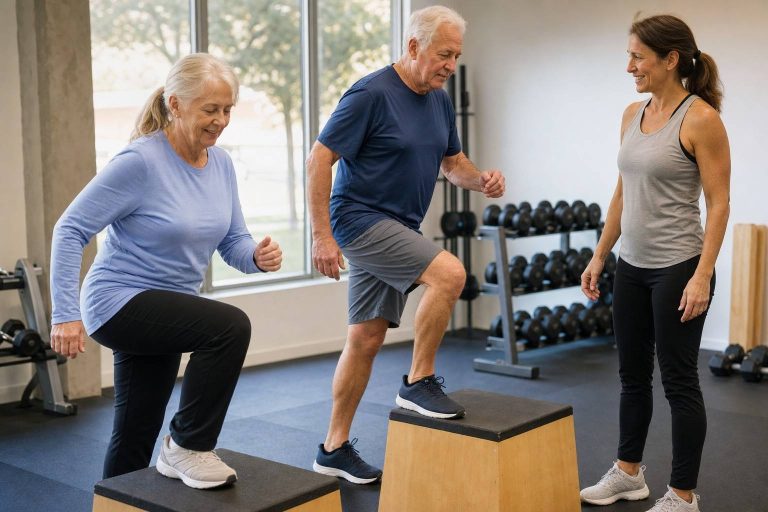
The box jump becomes a step-up
A box jump asks the body to absorb landing force again and again.
The modified version: a step-up onto a low, stable step, one leg at a time. It builds the same single-leg strength and power without the impact of landing.
Upper-body pushing and pulling
Three more movements, split between pushing, pulling, and pressing overhead.
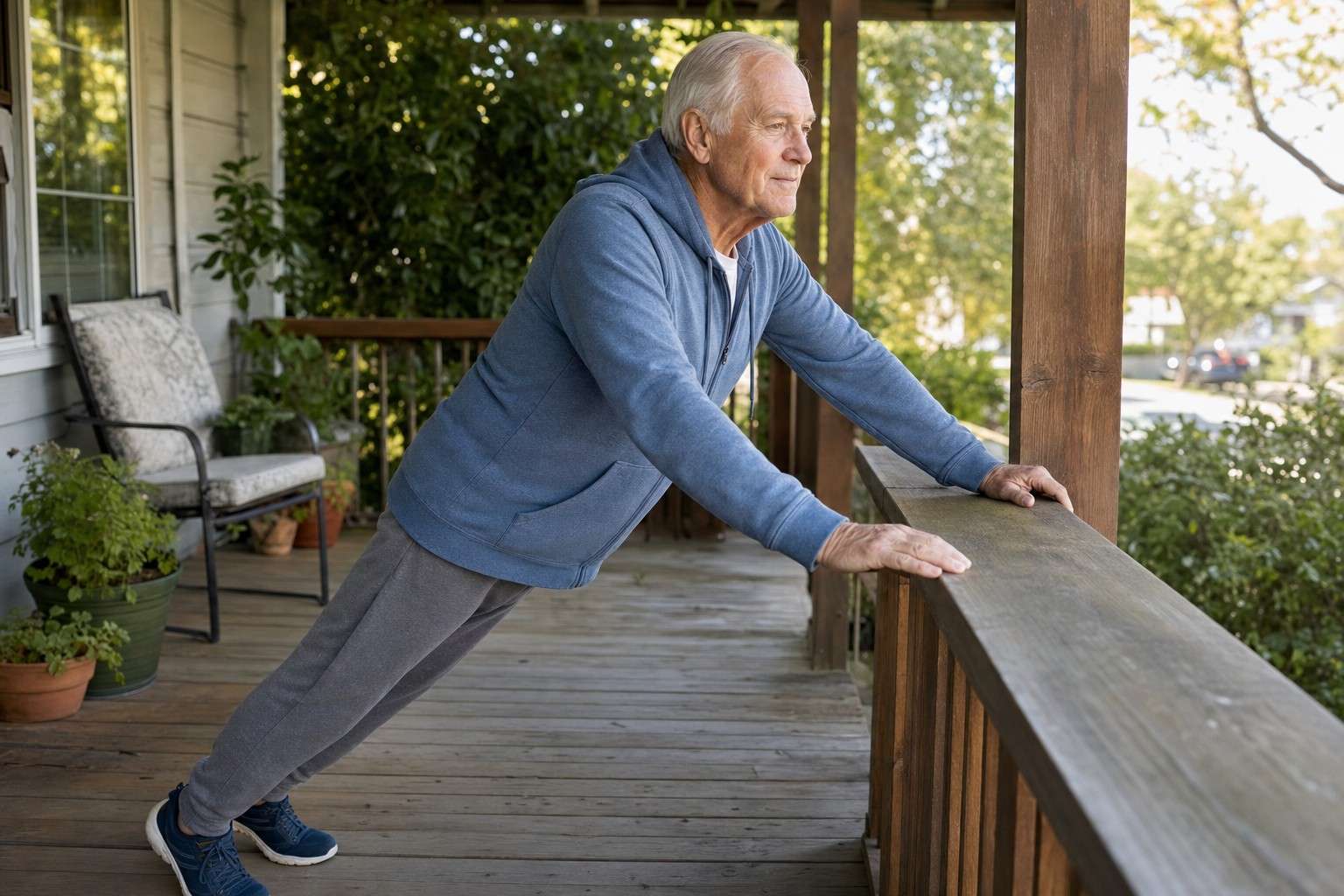
The push-up becomes an incline push-up
A floor push-up puts most of the body’s weight through the arms and shoulders.
The modified version: an incline push-up against a kitchen counter or a sturdy railing. Raising the angle lowers the load. A steeper incline is easier, and a shallower one is harder.
The pull-up becomes a doorway row
A pull-up asks the arms to lift the full body weight while hanging.
The modified version: a doorway row using a towel looped around a sturdy frame, or a bent-over row with a resistance band. Both build the same pulling strength without needing to hang from anything.
The overhead press starts lower and lighter
A barbell overhead press asks for full shoulder range under load.
The modified version: pressing light objects, like soup cans or small water bottles, only up to eye level at first. Shoulder range decides the ceiling, not ambition. Raise the height only as it stays comfortable.
The burpee becomes a step-back and a stand
A standard burpee drops to the floor, jumps the feet back up, and often adds a jump at the top.
The modified version: step back into a plank position, step back in, and stand up tall, no jump and no floor drop. It’s the movement that opened this guide, and it captures the whole approach: keep the pattern, remove the impact.
Three ways to scale any movement
Knowing how to modify CrossFit movements comes down to three levers, and every version above uses at least one of them.
- Range of motion. Shorten how far the body has to travel, like raising the deadlift object or capping the press at eye level.
- Load. Lower the resistance, whether that’s body weight, a band, or a light object instead of a barbell.
- Speed. Slow the movement down. A slow sit-to-stand builds more control than a fast one, even at the same range and load.
Scaling for seniors also means having something to hold onto. A wall or a sturdy kitchen counter is worth keeping nearby for any of these. A hand resting on a stable surface adds balance support without changing the exercise itself.
These same three levers carry over into a full functional workout built for home, not just a one-off substitution.
When to make it harder
A rule of thumb: once the easier version feels smooth and controlled for two weeks straight, add range or load next, not speed. Speed is the last thing to bring back, if at all.
This is general information, not individualized guidance. Anyone recovering from a joint replacement, managing osteoporosis, or dealing with a balance condition should get personal clearance first. A physical therapist can check the specific movement list before starting.