Your Walking Speed Is a Vital Sign: What Gait Speed Reveals About Aging
How fast you walk may be one of the best predictors of how long you stay healthy and independent. Doctors even have a name for it: the sixth vital sign.
In a landmark 2011 analysis published in JAMA, researchers pooled data from nine groups of older adults. People who walked about one meter per second or faster lived markedly longer than slower walkers.
Your pace is not just about getting from the couch to the kitchen. It is a quiet readout of your whole-body health.
Why walking speed says so much
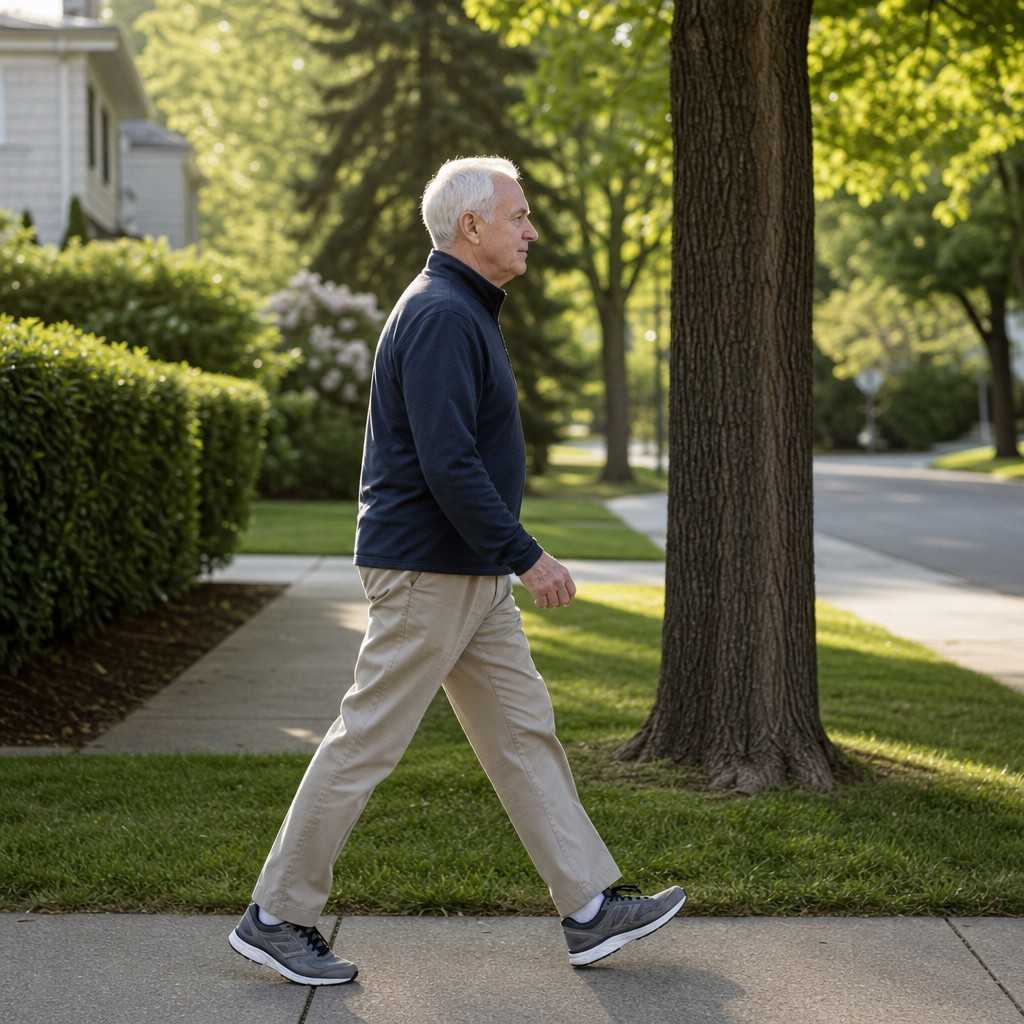
A normal stride pulls on almost everything at once. Your heart, lungs, muscles, joints, balance, nerves, and even your eyesight all have to cooperate.
When any one of them weakens, your pace usually slips first.
That is why gait speed tracks so closely with independence, hospital stays, and even survival. In the JAMA data, each small gain of 0.1 meters per second was linked to a meaningful drop in death risk.
It is also tied to falls. The CDC reports that one in four older adults falls each year, and slower, less steady walkers are among the most at risk.
What the numbers mean
Researchers treat walking speed as a functional vital sign, and they watch a few rough thresholds. Use these as a guide, not a verdict.
- Under about 0.6 m/s: a sign of higher frailty and health risk.
- Around 0.8 m/s: a common cutoff clinicians watch for early decline.
- 1.0 m/s or faster: linked with healthier aging and longer survival.
One meter per second sounds technical.
In plain terms, it is the pace that clears most street crossings before the light changes.
Test your own walking speed at home
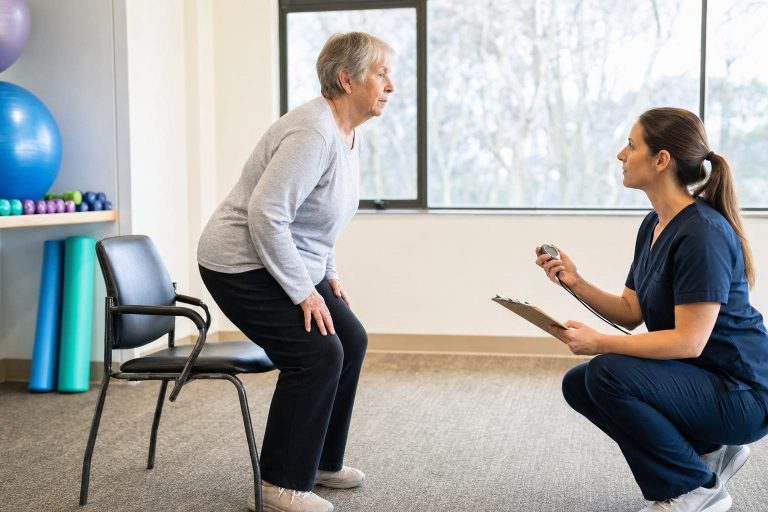
You can measure your own walking speed in two minutes, with no clinic needed. Clinics use a simple 4-meter walk test, and you can copy it in a hallway.
- Mark a straight, clear path about 13 feet long (4 meters).
- Start walking a step before the line so you are already at your normal pace.
- Time how many seconds it takes to cover the 13 feet at a comfortable pace.
- Divide 4 by your seconds. If it took 5 seconds, that is 0.8 m/s.
Do it two or three times and take the average. Keep a hand near a wall or rail for safety.
This is a screen, not a diagnosis. A sudden drop in your usual pace is worth a call to your doctor.
How to walk faster and age stronger
Walking speed is feedback you can act on, and it responds quickly to the right work.
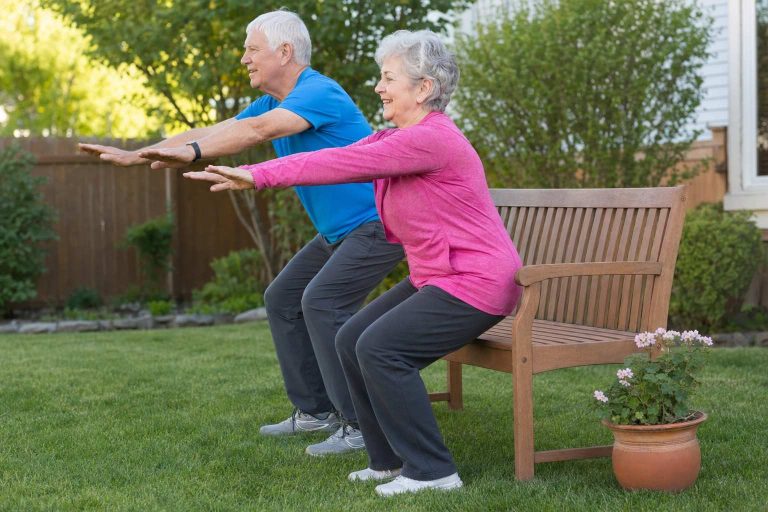
- Build leg power. Strong hips and thighs drive your stride. Try our leg-strength routine for seniors.
- Train balance. Steadier footing lets you push the pace. Start with simple balance exercises.
- Walk more. Frequent short walks add up fast, as we cover in the benefits of walking for seniors.
- Fix the friction. Supportive shoes and, if balance is the limit, a properly fitted walking cane help you move with confidence.
The bottom line
Your walking speed is one of the simplest health checks you can run, and it costs nothing.
Time yourself this week.
Then work the levers that move it: strength, balance, and steady daily walks.
Small gains in pace track with more years of doing what you love. That makes it one of the best investments your legs can make.