13 Best Walking Canes for Balance and Stability (2026 Guide)
The right walking cane gives you steadier balance, less joint strain, and the confidence to keep moving on your own. The wrong one quietly works against you.
We compared dozens of canes on the things that matter most for older adults: stability, grip comfort, weight, adjustability, and price. Here are 13 we trust, grouped by who each one suits best, plus a plain guide to choosing your own.
Reader-supported: if you buy through links on this page we may earn a small commission, at no extra cost to you. It never changes which canes we recommend.
Our Top Walking Canes at a Glance
- Best all-round: HurryCane Freedom Edition
- Best lightweight value: DMI Deluxe Lightweight Adjustable
- Best for hand or wrist pain: Nova Orthopedic Cane
- Best wooden cane: Asterom Handmade Wooden Cane
- Best for extra stability: Medline Aluminum Quad Cane
- Best stylish pick: DMI Designer Cane with Offset Handle
- Best for travel: REHAND Foldable Walking Cane
- Best for low light: BigAlex Folding Cane with LED
- Best heavy-duty: Nova Heavy Duty Offset Cane
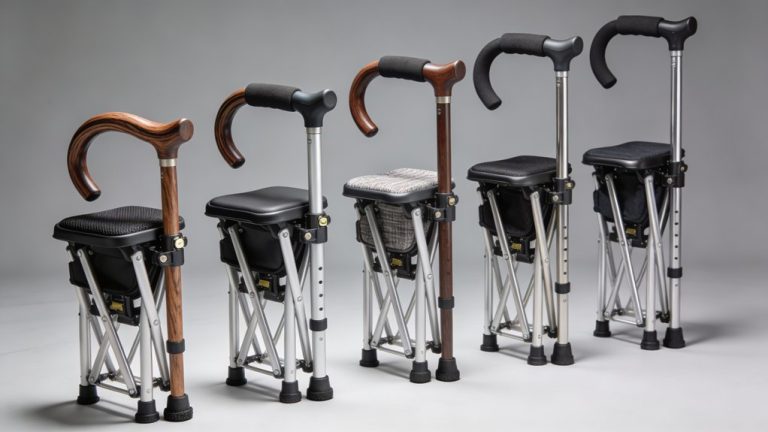
- Best with a built-in seat: Drive Medical Folding Cane Seat
- Best for more support than a cane: Drive Medical Hemi Walker
- Best self-standing: Campbell Posture Cane
- Best shock-absorbing: Ergocane 2G
Compare all 13 canes
| Cane | Best for | Weight / material | Handle | Base type |
|---|---|---|---|---|
| HurryCane Freedom Edition | All-round pick | – | – | 3-point pivoting, self-standing |
| DMI Deluxe Lightweight Adjustable | Budget everyday cane | Light aluminum | Foam grip | – |
| Nova Orthopedic Cane | Arthritis, weak grip | – | Orthopedic, left/right versions | – |
| Asterom Wooden Cane | Character and looks | Hardwood, fixed length | Derby handle | – |
| Medline Aluminum Quad Cane | Extra stability | Aluminum, rated to 300 lb | – | Four-point (quad), self-standing |
| DMI Designer Cane | Style and balance | – | Offset handle | – |
| REHAND Foldable Cane | Travel, occasional use | – | – | Folds into short sections |
| BigAlex Folding Cane with LED | Dim hallways, evenings | – | Built-in LED, wrist strap | Folding |
| Nova Heavy Duty Offset Cane | Taller or heavier users | Reinforced shaft, higher capacity | Wide offset handle | – |
| Drive Medical Folding Cane Seat | Frequent rest stops | Heavier than a plain cane | – | Folds into tripod seat |
| Drive Medical Hemi Walker | More than a cane, less than a walker | – | One-handed frame | Wide base, folds flat |
| Campbell Posture Cane | Self-standing | – | Posture-support handle | Self-standing pivot base |
| Ergocane 2G | Shock absorption | – | – | Spring-loaded shaft, self-standing |
13 Best Walking Canes Reviewed
1. HurryCane Freedom Edition
Best for: most people who want one cane that does everything well.
The HurryCane is popular for good reason. Its pivoting base flexes with each step and then stands on its own when you let go, so you are not chasing a cane that clatters to the floor. It folds down small enough for a bag, and the height adjusts across a wide range. For a first cane, it is hard to go wrong here.


2. DMI Deluxe Lightweight Adjustable Walking Cane
Best for: a dependable everyday cane on a budget.
This is the no-drama choice. Light aluminum, an easy push-button height adjustment, and a comfortable foam grip cover the basics without fuss. If you want a simple cane that just works and costs little, start here.

3. Nova Medical Products Orthopedic Cane
Best for: arthritis, a weak grip, or sore wrists.
An orthopedic handle spreads your weight across the whole palm instead of digging into one spot. That small change makes a real difference if your hands tire quickly or ache. The contoured grip comes in left and right versions, so you get a proper fit for your stronger hand.

4. Asterom Handmade Wooden Walking Cane
Best for: anyone who wants a cane with character.
A hand-carved wooden cane feels less like medical gear and more like a keepsake, which makes some people far more willing to actually carry it. It is solid and warm in the hand. Just remember that wood is a fixed length, so size it carefully. For more options, see our guide to wooden canes.

5. Medline Aluminum Quad Cane
Best for: extra stability and standing the cane up unaided.
A four-point base gives a wider, steadier footprint than a single tip, which helps a lot after a fall, a stroke, or any time confidence is low. It also stands on its own, so it is there when you reach for it. If you are weighing this style, our full guide to quad canes walks through base sizes and trade-offs.

6. DMI Adjustable Designer Cane with Offset Handle
Best for: a cane that looks good and feels balanced.
The offset handle puts your weight directly over the shaft for a secure, balanced feel, and the patterned finishes look more like an accessory than equipment. It is proof that practical and presentable are not opposites. Browse more options in our roundup of fashionable canes.

7. REHAND Foldable Walking Cane
Best for: travel and occasional use.
This one folds into several short sections and tucks into a purse, a glovebox, or carry-on. If you only need a cane now and then, or want a spare to keep in the car, a folding model earns its place. Flying soon? Read our notes on travelling by plane with a cane.

8. BigAlex Folding Walking Cane with LED Light
Best for: dim hallways and early evenings.
A built-in LED in the handle lights the ground ahead, which matters more than it sounds: poor lighting is a common factor in falls at home. Add a wrist strap and a folding design and you have a practical safety upgrade for anyone who is up during the night.

9. Nova Heavy Duty Walking Cane with Offset Handle
Best for: taller or heavier users who need a higher weight rating.
Built with a reinforced shaft and a higher weight capacity, this cane stays reassuringly solid where a standard model can feel flimsy. The wide offset handle suits larger hands too. If support capacity is your main concern, this is the safe bet.

10. Drive Medical Folding Adjustable Cane Seat
Best for: anyone who needs to rest often while out.
This cane unfolds into a small tripod seat, so a wait in line or a long walk through a park comes with a built-in place to sit. It is heavier than a plain cane, which is the fair trade for carrying your own chair. See more in our guide to walking canes with a seat.

11. Drive Medical Hemi Walker
Best for: people who need more than a cane but less than a full walker.
A hemi walker is a one-handed frame that bridges the gap between a quad cane and a walker. It gives a much wider base of support while still leaving your other hand free, which is common after a stroke. If you are torn between devices, compare your options in cane or walker: which is better.

12. Campbell Posture Cane
Best for: standing on its own without leaning against anything.
A self-standing base means you can park this cane at the checkout counter or a restaurant table without it clattering to the floor, and you never have to bend down to pick it up. The wider base does sit a little heavier at the tip than a standard single-point cane, so it can feel less nimble on stairs.

13. Ergocane 2G
Best for: cushioning impact for arthritic wrists and shoulders.
The Ergocane 2G uses a spring-loaded shaft that absorbs shock with every step, which many people with sore wrists or shoulders notice right away. Like our self-standing pick above, its wide base also stands on its own. The trade-off is a bulkier profile than a standard cane, so it will not fold flat into a bag.

Best walking canes for balance
For balance specifically, base design matters more than any other feature. A wider base trades a little extra weight for a steadier footing, and three of our picks above are built around that trade-off.
- Medline Aluminum Quad Cane: the widest, steadiest option here. Its four-point base spreads your weight across a wider footprint than a single tip, which helps most after a fall, a stroke, or when confidence in your steps is low. See our full guide to quad canes for base sizes and trade-offs.
- HurryCane Freedom Edition: a good middle ground. Its pivoting three-point base stands on its own and adds stability without the bulk of a full quad cane.
- Drive Medical Hemi Walker: for when a cane alone is no longer enough. Its one-handed frame gives a much wider base of support than any cane, which is common after a stroke. Compare the two in cane or walker: which is better.
As a rule, the more the base contacts the ground, the steadier the cane, but a wider base is also heavier and slower to place with each step. Start with the narrowest base that still gives you confidence, and size up only if you need to.
How We Chose These Canes
We did not rank these by price or brand alone. Our process starts with research: we compare manufacturer specifications and verified product listings against the same practical questions a physical therapist would ask, then weigh the concrete data points below for every cane on this page.
- Base type, from a single tip to a four-point quad base
- Weight, since a heavy cane gets left at home
- Handle design and grip comfort over a full day of use
- Adjustability and height range so the fit can be set correctly
- Foldability for anyone who travels or stores a cane in a car
- Value for what you actually get, not just the lowest sticker price
We do not weigh brand sponsorship, because there is none. No manufacturer pays for placement, and commissions never change the order a cane appears in. None of this replaces advice from a doctor or physical therapist who can watch you walk. Think of this as a head start, not a diagnosis.
How to Choose the Right Walking Cane
Five things decide whether a cane fits your life. Get these right and almost any quality cane will serve you well.
1. The handle
Your hand lives here, so comfort wins. Offset handles balance your weight over the shaft. Orthopedic handles spread pressure across the palm and suit arthritic hands. Classic hook handles look traditional but put more strain on one part of the grip.
2. The tip and base
A single rubber tip is light and fine for steady walkers. A quad or tripod base trades a little weight for a much wider footprint and the ability to stand on its own. If your balance is shaky, the extra base is usually worth it. Our overview of cane types breaks down each option.
3. Height and fit
This is the step most people skip, and it is the most important. The top of the cane should reach the crease of your wrist when you stand straight with your arm relaxed. An adjustable cane makes this easy. Our guide on the proper height for a cane includes a quick calculator.
4. Weight and material
Aluminum is light and adjustable. Wood is sturdy and handsome but fixed in length. Carbon fiber is the lightest of all and costs the most. Pick the lightest cane that still meets your weight rating.
5. Your real situation
Be honest about how you will use it. Travelers want folding. Restless hands want an orthopedic grip. Frequent rest stops call for a seat cane. Match the cane to your day and you will actually carry it.
Types of Walking Canes
A quick map of the main styles, with deeper guides if you want them:
- Standard canes are light, simple, and right for most steady walkers.
- Quad canes stand on a four-point base for extra stability.
- Folding canes collapse for travel and easy storage.
- Seat canes double as a portable place to rest.
- Wooden canes offer classic looks and solid feel.
- Fashionable canes put style first without losing function.
Some canes add a spring or shock-absorbing tip. The spring cushions the impact of each step, which can ease pressure on arthritic wrists or shoulders, at the cost of a slightly less precise feel for the ground underfoot. Our shock-absorbing pick above, the Ergocane 2G, uses this design.
Smart canes
A newer category adds electronics to the cane: obstacle sensors, fall alerts, and a companion phone app. WeWalk is the best-known example. It is built specifically for people who are blind or have low vision, not for general balance support, and it costs significantly more than a standard cane. For most readers of this guide, a standard or self-standing cane is the better fit.
Shopping for a specific person? We also have picks for women, and a look at cane accessories like tips, straps, and holders.
Using Your Cane the Right Way
A good cane only helps if you use it correctly. Hold it in the hand opposite your weaker leg, and move the cane and that leg together. Our step-by-step guide on how to use a cane covers stairs, curbs, and getting up from a chair.
Still deciding whether you even need one? It is worth understanding the difference between a walking stick and a cane, and whether a cane can ease back pain.
Frequently Asked Questions
How much should a good walking cane cost?
A reliable everyday cane runs about 15 to 40 dollars. Specialty canes with seats, premium grips, or carbon fiber shafts can reach 60 dollars or more. You rarely need to spend a lot for a safe, comfortable cane.
How much weight should a cane support?
Used correctly, a cane carries up to about 25 percent of your body weight. Always check the model’s stated weight capacity and choose a heavy-duty cane if you are near the limit.
Which hand should hold the cane?
Hold the cane on the side opposite your weaker or painful leg. This lets the cane and the weak leg share the load with each step, the way a healthy stride naturally works.
How long should a walking cane be?
The cane should reach your wrist crease when you stand upright in your usual shoes, leaving a slight bend in your elbow. For the full method and a sizing chart, see our guide to proper cane height.
Where can I buy a walking cane near me?
Pharmacies, medical supply stores, and big-box retailers usually stock a basic cane in person, which is worth it if you want to try the height and grip the same day. Online retailers carry a wider range of styles and heights, often at a lower price. For a full list of where to look locally and online, see our guide to where to buy a walking cane.
Are any walking canes made in the USA?
Yes, though most mass-market aluminum canes on the market are manufactured overseas. Some smaller US woodworkers and specialty medical suppliers still hand-make or assemble canes domestically, especially wooden and custom-fit models. If USA-made matters to you, check the listing details or ask the seller directly, since country of origin is not always stated up front.
The Bottom Line
The best walking cane is the one that fits your hand, your height, and your daily life well enough that you actually use it. For most people the HurryCane Freedom Edition is a smart starting point. If you need more stability, step up to a quad cane. If style is what gets you out the door, a wooden or designer cane is money well spent.
Whatever you choose, set the height correctly and hold it on the right side. A cane that fits is a cane that keeps you steady, independent, and moving.
More walking cane guides
This roundup covers which cane to buy. These guides cover everything around it, from fitting and safety to the situations nobody warns you about.
- Not sure where to start? Our tips on how to choose a cane walk through the basic decisions.
- If you need a higher weight rating, see our tips for choosing a bariatric cane.
- Build and grip often differ by user, which we cover in why there are different canes for men and women.
- Wondering about the paperwork? We answer whether you need a prescription to use a cane.
- Once you have one, our walking cane safety tips cover how to walk safely with it.
- The evidence is more mixed than you might expect. We looked at whether walking canes actually prevent falls.
- For the case in favor, read about the benefits of a walking cane for seniors.
- Many people struggle with the idea itself, so we wrote about coming to terms with using a walking cane.
- Tips wear out faster than people expect. Here is how to measure cane tip size.
- To stop it clattering to the floor, a cane holder is a cheap fix.
- If nothing off the shelf fits, see our guide to buying custom canes.
- Heading outside? We cover how to decide on an outdoors walking cane.
- Still weighing your options? We compare them in cane vs crutches.
- Technology has reached canes too, which we explain in the next generation walking cane.
- Flying soon? Read why stun canes get seized at airport security before you pack.