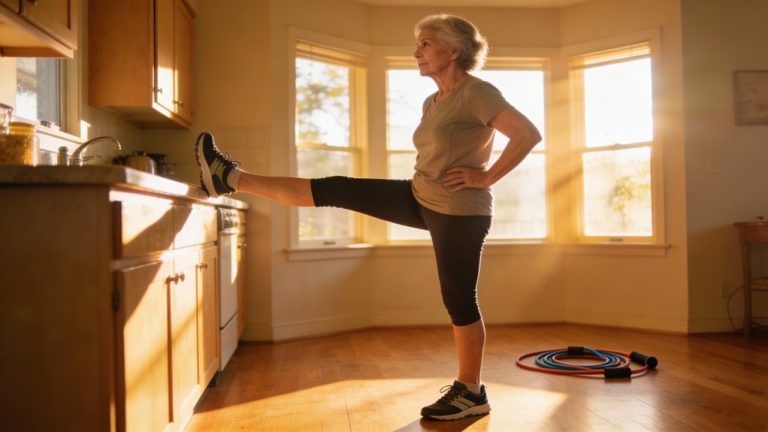
Functional Fitness for Seniors: A Complete Guide to CrossFit-Style Training After 60
Carrying two bags of groceries up the porch steps. Getting down onto the kitchen floor to pick up a dropped set of keys, then back up again without grabbing the counter. Helping a grandchild off the floor after a game.
None of those look like exercise. All three are functional fitness in action.
Functional fitness means training the movements a body actually uses every day, not movements built for a gym mirror.
The core patterns are simple.
Standing up from a chair, carrying a load, getting down to the floor and back up, and stepping up onto something.
Functional fitness for seniors has a specific tool that’s become popular for building strength in exactly those patterns.
It’s CrossFit-style training, scaled for a body that isn’t 25 anymore.
Here’s what that actually looks like after 60, and how to start it safely.
What functional fitness actually means
Traditional gym machines isolate one muscle at a time, like a leg press or a bicep curl.
Functional fitness trains whole movement patterns instead, the way the body naturally moves through a day.
A few examples that show up constantly in daily life:
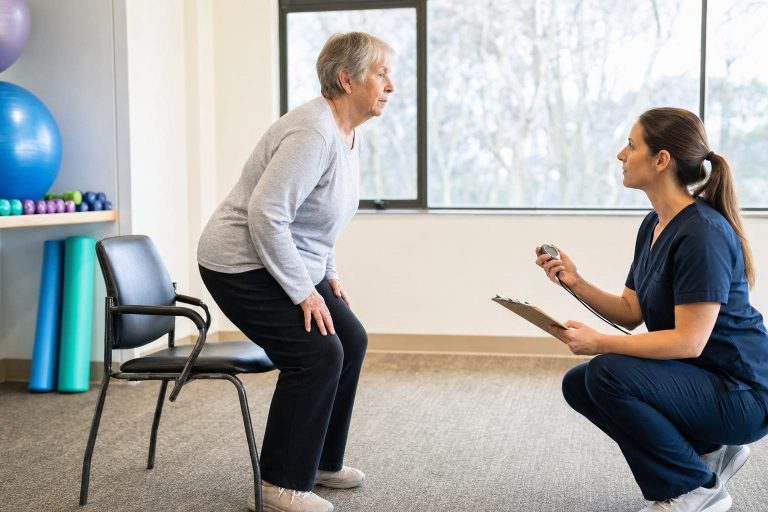
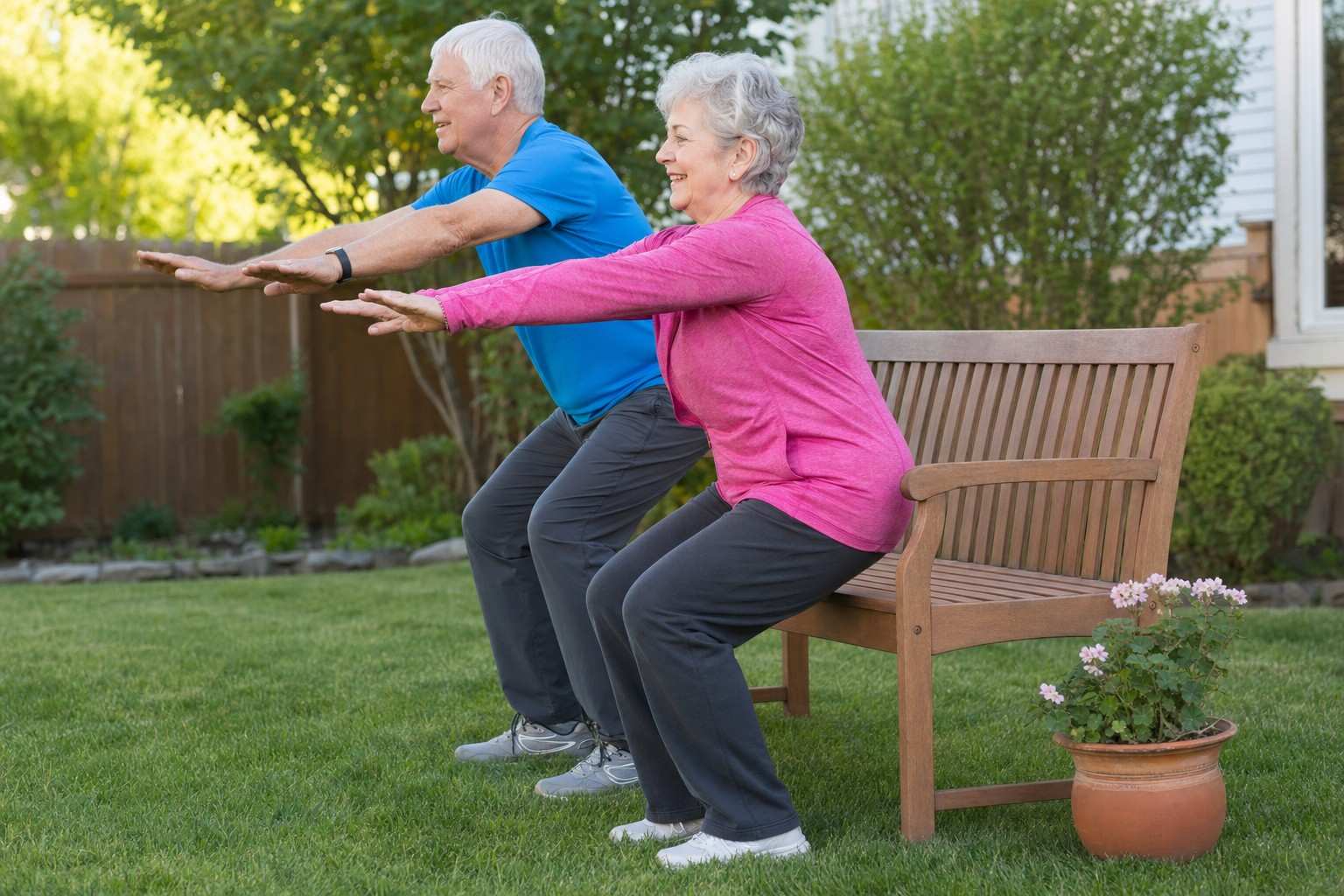
- Sit-to-stand: rising from a chair, a car seat, or the toilet without pushing off with your hands.
- Carrying: groceries, a laundry basket, a grandchild.
- Floor-to-stand: getting down to the floor and back up under your own power.
- Step-up: climbing a curb, a porch step, or a bus step.
Losing any one of these abilities is what actually costs someone their independence, not a low score on a gym machine.
Training them directly, rather than hoping general activity keeps them sharp, is the whole premise behind functional fitness.
What CrossFit-style training looks like after 60
CrossFit, the brand, built its identity on constantly varied, high-intensity functional movements.
CrossFit for older adults, done well, keeps the functional-movement part and drops the high-intensity-for-its-own-sake part.
In practice that means shorter, structured sessions, often 30 to 45 minutes, and lighter loads. Every movement is scaled to fit a 60-plus body rather than a competitive athlete’s.
A squat becomes a sit-to-stand from a box.
A barbell deadlift becomes lifting a light kettlebell off the floor with a straight back.
It’s worth reading in detail how a coach actually makes those swaps before you start modifying the standard CrossFit movements for an older body.
Even the sport’s competitive side has built a lane for this age group.
The CrossFit Games age divisions now run Open divisions up through 65 and beyond, plus a separate Masters CrossFit Games. It has also trialed a division for athletes 70 and up.
That doesn’t make the sport safe for every 70-year-old on its own. It does mean scaled, age-appropriate training inside this format is an established idea, not a fringe one.
This is not the CrossFit you have seen on TV
What is CrossFit for seniors, really? If the word brings to mind young athletes throwing heavy barbells overhead against a countdown clock, that image is doing real damage.
It scares off exactly the people who’d benefit most.
Functional fitness for older adults doesn’t use maximum loads, and it doesn’t chase a countdown clock. It also won’t ask anyone to attempt a movement their body isn’t ready for.
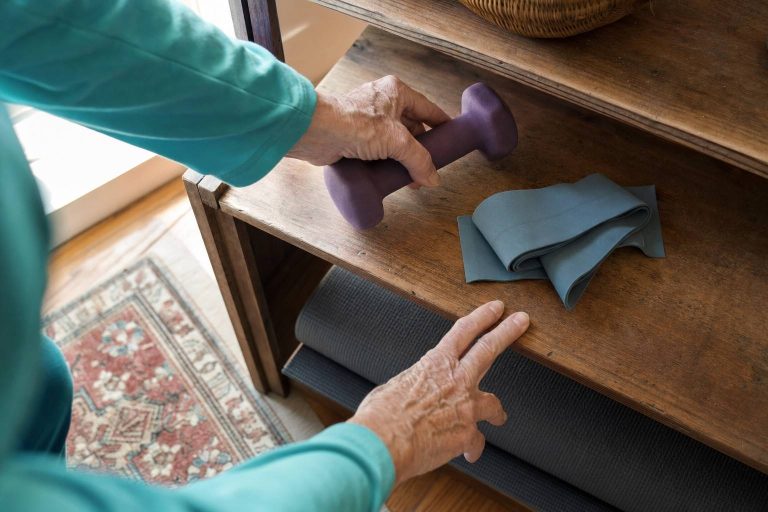
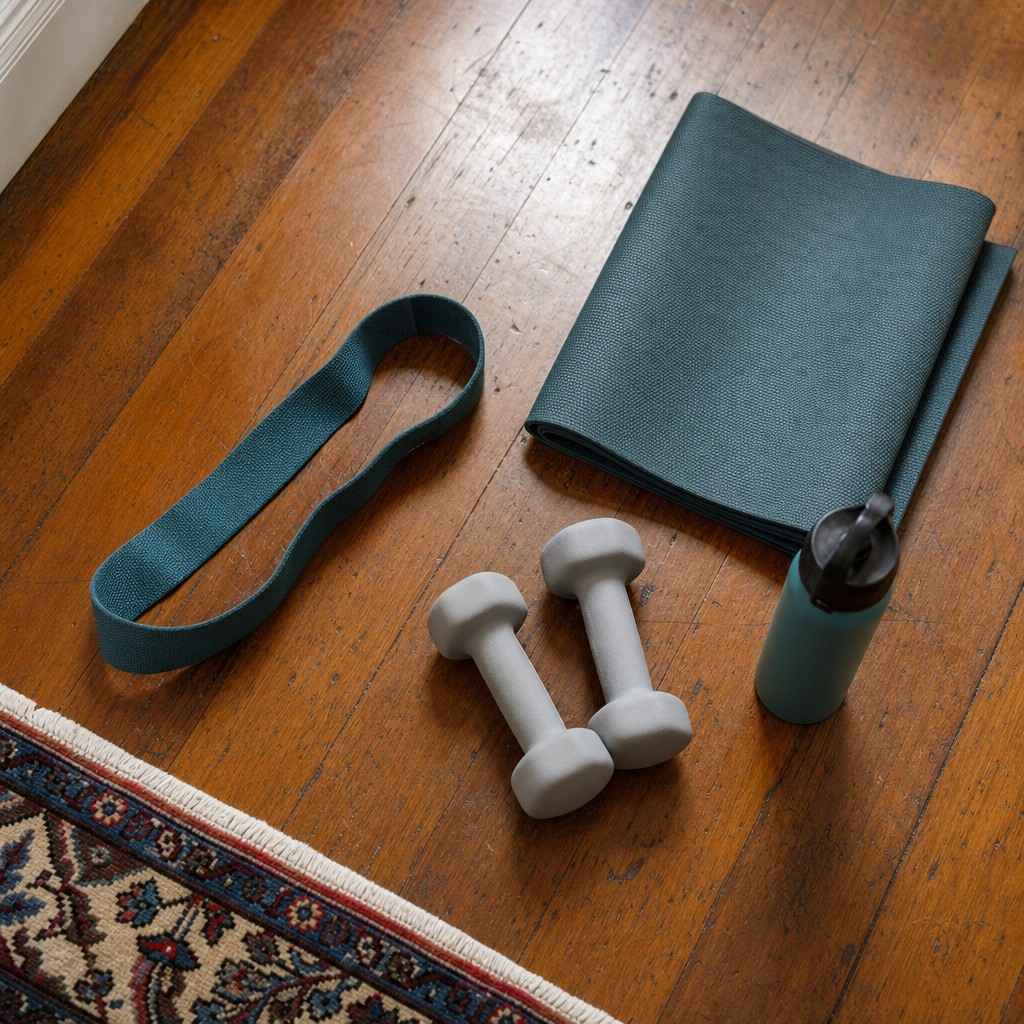
A session can be entirely bodyweight, a resistance band, and a light set of dumbbells.
The honest question isn’t whether CrossFit is safe in general. It’s whether a scaled, coached version of it is safe for you specifically. That’s exactly what the safety evidence behind training this way after 60 works through in detail.
Fewer falls, more independence
A 2019 Cochrane review of exercise programs found that exercise reduces the rate of falls among older adults living independently by 23 percent.
Programs built specifically around balance and functional movement pushed that reduction to 24 percent. Programs that combined functional training with resistance and balance work together reduced falls by 34 percent.
Adults 65 and up should get at least 150 minutes of moderate aerobic activity a week, plus balance activities. That’s according to the CDC’s physical activity guidelines.
The often-missed piece is the strength requirement: muscle-strengthening activity on at least two days a week, not zero and not every day.
Functional fitness sessions are a direct way to hit that specific target.
Strength and balance work together also change how someone gets around day to day.
Some of that comes from simple balance exercises that help prevent falls. Some of it comes down to whether a walking cane actually reduces fall risk for someone who already needs extra support.
What a 12-week program actually did for older adults
A total of 169 adults over 65, averaging around 77 years old, took part in one 2023 randomized trial.
Over 12 weeks they did high-intensity functional training, three 45-minute sessions a week.
Gait stability, balance, and independence in daily activities all improved by a statistically significant margin.
Frailty status, though, didn’t change significantly over those 12 weeks.
Twelve weeks builds real, measurable function. It isn’t, on its own, a cure for frailty.
How to start safely
Talk to your doctor or physical therapist before starting, especially with a heart condition, a joint replacement, or osteoporosis.
That short conversation catches problems early, before they turn into injuries that stop someone from trying again.
From there, starting at home removes most of the intimidation. A short list of what that first setup needs:
- A sturdy chair for sit-to-stand work.
- Space to get down to the floor and back up safely.
- One light set of dumbbells or a resistance band.
A first session doesn’t need to be complicated. See functional workouts you can do at home for exactly what that looks like.
A short equipment guide built for this kind of training covers what’s actually worth buying versus skipping.
Where functional fitness fits alongside walking
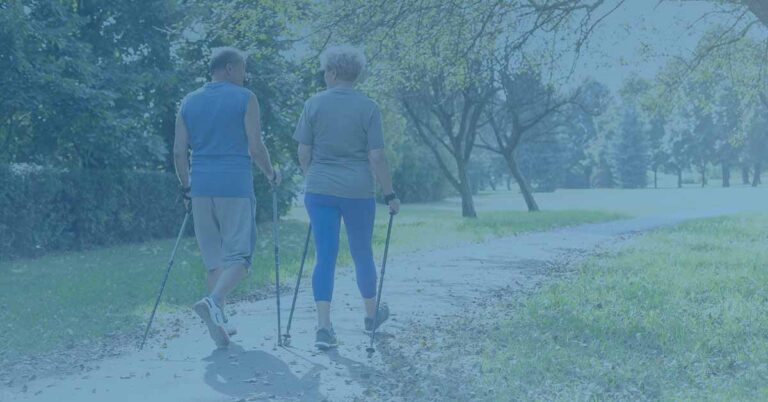
Walking covers the aerobic piece of the CDC’s guidelines well.
It does far less for the muscle-strengthening piece, and functional fitness is built to close exactly that gap.
The two work best together, not as competitors.
Someone who walks regularly and adds two functional-fitness sessions a week is covering all three pillars: aerobic activity, strength, and balance.
The connection runs deeper than it looks. Gait speed is considered such a reliable marker of overall function that clinicians sometimes call it a vital sign.
The strength work in a functional-fitness session is a direct way to protect that number.
Your first week
Start by finding out where you actually stand. A short senior fitness test gives you a real baseline in a few minutes, no gym required.
From there, pick two days this week for a short session: a set of sit-to-stands from a sturdy chair, some light carrying, and a few minutes of floor-to-stand practice if your knees allow it.
That’s the entire first week. Everything else can wait until it’s earned.