Is CrossFit Safe for Seniors? What the Research Says
A lot of these questions start the same way.
An adult child sees a CrossFit video online, all barbells and speed, and calls a parent worried they might get hurt trying it.
Or a 68 year old gets told by a doctor to start lifting weights.
They wonder if the gym with the CrossFit sign down the street is actually a reasonable place to start.
Both are really asking the same thing.
Is CrossFit safe for seniors, or is it a young person’s sport dressed up as fitness advice for everyone else?
The honest answer sits between the hype and the fear.
Below is what an actual trial in older adults measured.
It’s also what a large falls-prevention review found for this training style, and where the evidence still runs out.
What “CrossFit for seniors” really means
CrossFit is a specific brand and a specific competitive sport, one that increasingly includes older athletes (more on that below).
Most people asking whether CrossFit is good for over 60 are not really asking about the sport itself.
They are asking about the training style it popularized: short, varied sessions mixing strength work, cardio, and functional movement like squatting, lifting, and carrying.
Researchers call this high-intensity functional training, or HIFT.
It is what most of the research below actually tested, scaled and supervised for an older body.
The approach lines up with what we cover in functional fitness for seniors, our broader guide to this style of training.
The research is almost always testing supervised, scaled HIFT, not an unmodified CrossFit Games workout.
What a 12-week trial in older adults found
A 2023 trial gives the clearest answer available right now.
Researchers ran a 12-week randomized trial of high-intensity functional training in adults over 65, average age around 77, with three 45-minute sessions a week.
Balance and gait stability both improved with strong statistical significance, and so did independence in daily activities.
Gait and balance scores improved with p less than 0.001, a strong result for a trial this size.
Independence in day-to-day activities improved too, with p equal to 0.003.
One result did not move.
Frailty status, a broader clinical score, did not change in a statistically meaningful way over the 12 weeks, with p equal to 0.170.
Balance and independence improved before frailty status caught up, if it caught up at all in just 12 weeks.
What that means if you have never done a burpee
None of those 169 participants walked into an ordinary CrossFit class and did the workout posted on the whiteboard.
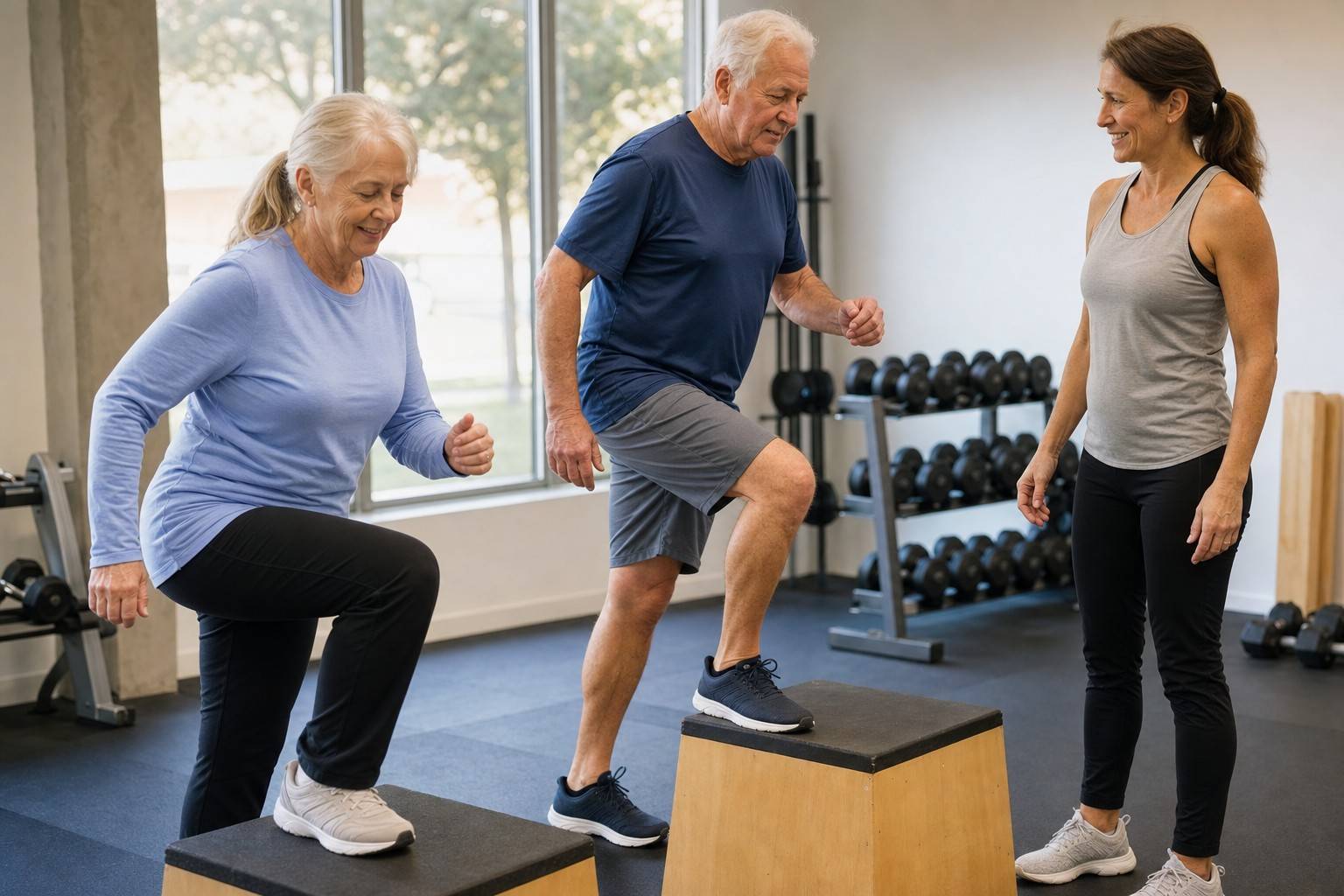
The training was supervised one-on-one or in small groups, scaled to each person’s ability, and built around functional movement rather than competitive intensity.
The real safety question is less about CrossFit as a brand and more about supervision and scaling.
That’s also the answer to whether CrossFit is safe for over 50.
Age was not the variable that mattered in the trial. Scaling was.
That scaling shows up in specifics: lighter loads, shorter ranges, swapping a jump for a step.
See how CrossFit movements get modified for older adults for the full breakdown.
The bigger picture on falls
Falls are the real underlying worry behind should seniors do crossfit, more than the workout itself.
Here the evidence is broader and older.
A major review of exercise and falls in older people, known as the Sherrington Cochrane review, pooled data across 59 studies and 12,981 participants.
Exercise programs like this cut the rate of falls in community-dwelling older adults by close to a quarter.
The overall reduction was 23 percent, a high-certainty finding.
Balance and functional exercise alone reduced falls by 24 percent.
Programs combining balance, functional movement, and resistance training together reduced falls by 34 percent.
That combined category, balance plus functional movement plus resistance, is close to what HIFT-style training delivers in one session.
For anyone already leaning on a cane, our piece on whether walking canes actually prevent falls covers the other half of that picture.
What the guidelines already ask for
The CDC’s physical activity guidelines for older adults call for at least 150 minutes of moderate aerobic activity a week.
On top of that, it calls for muscle-strengthening activity at least two days a week, plus balance activities.
The federal guidelines already call for exactly the combination this style of training delivers in one place.
Most seniors get the walking part in.
Far fewer get the strength part, which is usually the piece missing.
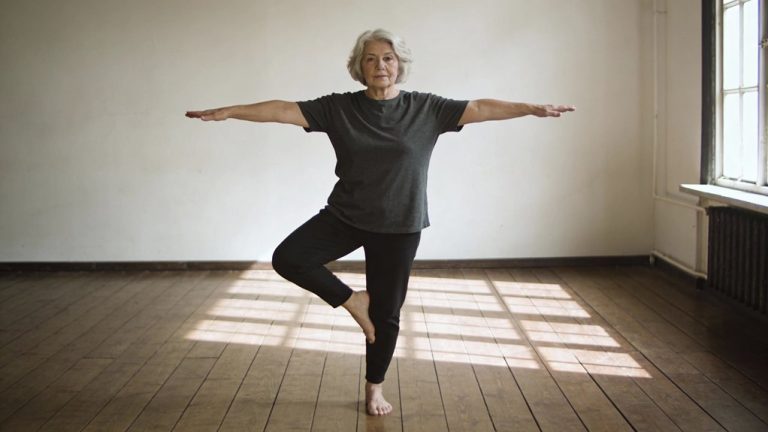
For a lower-intensity starting point, simple balance exercises that help prevent falls focus on the balance piece alone, before adding any load.
Yes, people in their 60s and 70s compete
This is a color note, not a safety argument.
As of a February 2024 CrossFit Games announcement, the official Open divisions run up to 65 and older.
The Masters CrossFit Games are organized by age group through Legends, and a 70-plus division has been trialed.
People finishing on that podium prove the sport scales upward.
They do not prove it is safe without modification for someone starting from zero.
Those athletes trained for years to get there.
What the evidence cannot tell you yet
This field is still small. The trial above is one of the better-designed studies, and it ran in a supervised setting with a research team watching form and adjusting load.
A 12-week supervised trial is not the same as walking into an unmodified class at a neighborhood CrossFit gym. Nobody has good long-term data yet on what happens over years, or in a group class without one-on-one coaching.
The frailty result matters here too. Balance, gait, and independence improved without frailty status itself moving. That gap between feeling and function on paper is a genuinely open question for anyone with several chronic conditions.
The bottom line
So, is CrossFit safe for seniors?
The honest answer: CrossFit-style training, scaled and supervised, shows real measured improvements in balance, gait, and independence. It also lines up with what the exercise-and-falls research already supports.
It has not been shown to reverse frailty on its own in the short term.
The trials behind it are still few, small, and short.
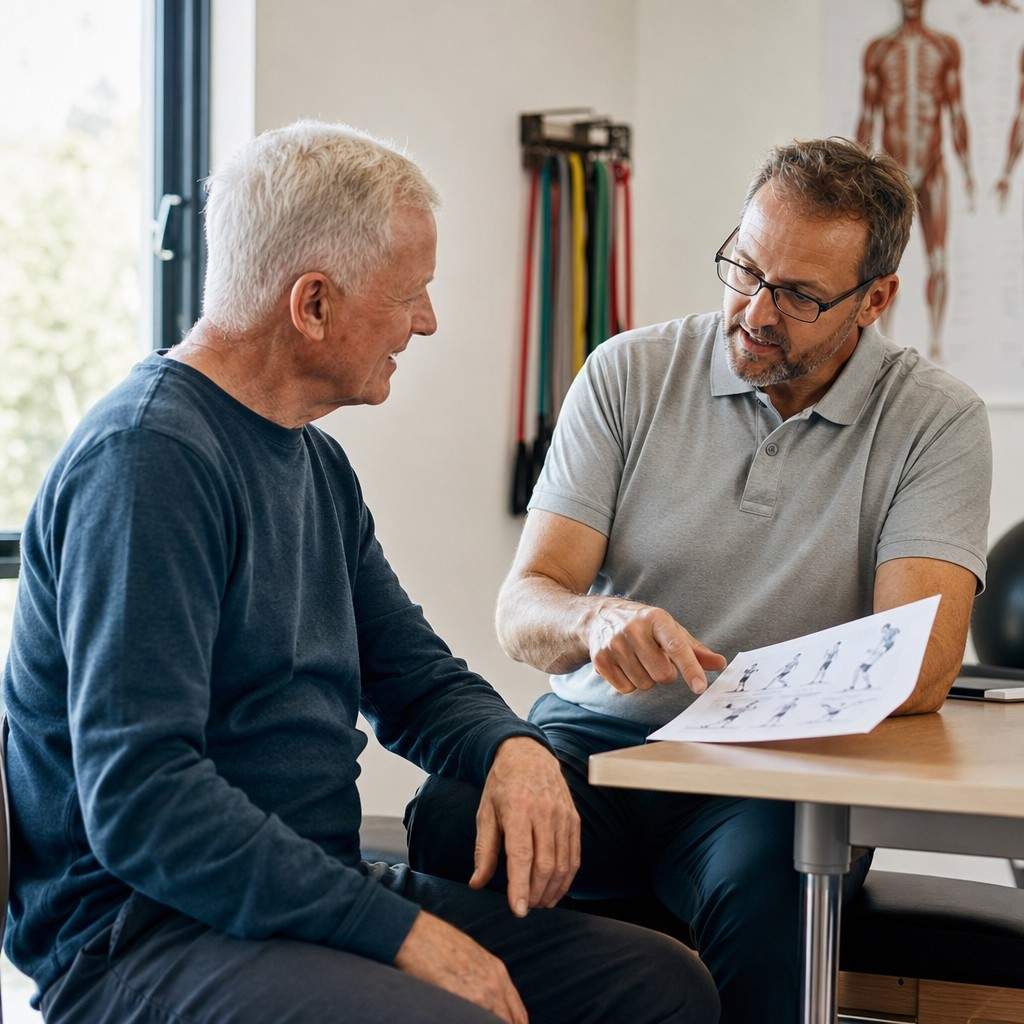
Before starting, especially with any heart, joint, or balance condition, talk it through with a doctor or physical therapist.
They’re the ones who can look at your specific situation.
That is not boilerplate caution.
It is what turns a promising study into a program that actually fits you.