The Different Types of Canes for Walking
Canes are not one-size-fits-all. The right style depends on your balance, your grip strength, and how much support you need day to day. Some people do well with a simple wooden cane. Others need a wider base or a special handle. This guide walks through the main types so you can find the best fit. For a full comparison of top-rated options, see our guide to the best walking canes.
Reader-supported: if you buy through links on this page we may earn a small commission, at no extra cost to you.
Standard crook cane
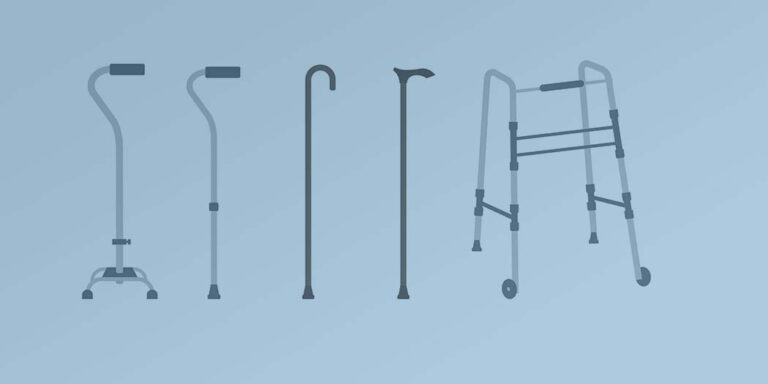
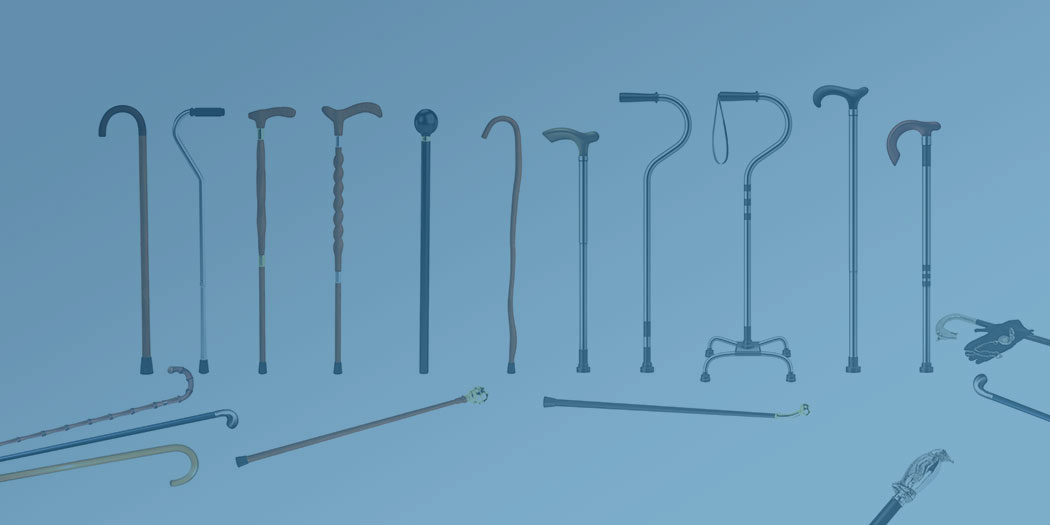
The crook cane is the classic curved-handle style most people picture when they think of a cane. It is usually made of wood and costs less than most other types. The curved handle hooks over your arm when you need both hands free, which is handy. One thing to keep in mind is that the round handle can press into the palm and feel uncomfortable on longer walks. If you like the look of wood, our full guide to wooden canes is worth reading before you decide.
Standard aluminum cane
Aluminum canes are the most common choice today. They are light, easy to adjust to the right height, and come in many colors. Most have a simple derby or T-handle that is comfortable for everyday use. This is a good starting point if you are new to using a cane and want something practical and affordable.
Orthopedic grip cane
An orthopedic grip cane has a contoured handle shaped to fit the hand. Instead of all the pressure landing on one spot, the weight spreads across the whole palm. This makes a real difference if you have arthritis, joint pain, or a weaker grip. Many people find they can use this style for longer periods without hand fatigue.
Offset cane
On an offset cane, the handle sits directly over the shaft rather than to the side. That alignment puts your body weight right over the tip, which gives you a more stable, balanced feel with each step. Many people find an offset cane easier to hold for long stretches. It is a popular upgrade from a standard aluminum cane for anyone who wants a bit more control.
Quad cane
A quad cane has four small feet at the base instead of one tip. That wider footprint gives you the most stability of any single cane. It stands on its own when you set it down, which many users find convenient. A quad cane is often recommended for people recovering from a stroke or anyone who needs extra support on one side. If balance is your main concern, this is the type to look at first.
How to choose the right type
There is no single best cane. A few questions help narrow it down.
- Balance needs. If you feel unsteady or are recovering from an injury, a quad cane gives the most support. A standard cane is enough for mild balance issues.
- Grip comfort. If you have hand pain or arthritis, an orthopedic grip handle is worth the small extra cost. A smooth round handle can become uncomfortable fast.
- Weight. Aluminum is lighter than wood. That matters if your arm tires easily.
- Height. Getting the right height is one of the most important steps. A cane that is too short or too tall puts strain on your back and wrist. Ask your doctor or physical therapist to help you set the correct height.
- Style. Some people want a cane that reflects their personality. There are many fashionable canes that are also fully functional.
The bottom line
Most people start with a standard aluminum cane and find it is all they need. If you have grip issues, an orthopedic handle makes daily use much easier. If stability is a real concern, move up to an offset or quad cane. The best cane is the one you will actually use, every day, with confidence. When in doubt, talk to a physical therapist before buying. They can match the right type to your situation.